Religious Freedom and the Courts

  • Post published:

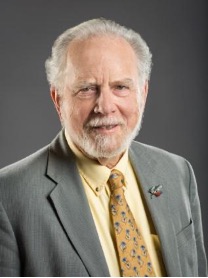
James T. Richardson is Emeritus Foundation Professor of Sociology and Judicial Studies, University of Nevada, Reno.

This post is part of a series on the sociology of religious freedom.

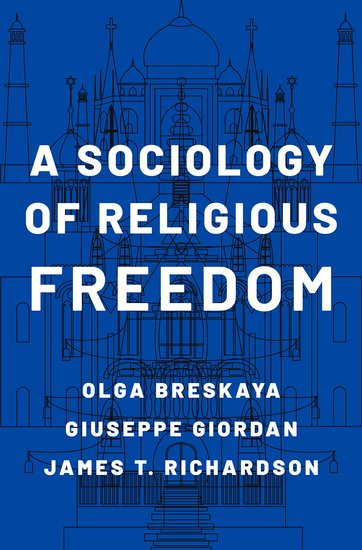
A Sociology of Religious Freedom, coauthored by Olga Breskaya, Giuseppe Giordan, and James T. Richardson, offers in part a sociological perspective on the theoretical underpinnings of the role played by the courts, especially in Western societies, in determining the meaning and implementation of religious freedom. It first explicates how and why this crucial role for the courts has evolved in recent decades and then explores specific trends and landmark cases in major judicial systems in the United States and in Western Europe, focusing on the role courts have played in the protection of religious freedom.
(more…)

Continue ReadingReligious Freedom and the Courts

Three Aims of Sociology of Religious Freedom: Toward a New Paradigm of Religious Change

  • Post published:

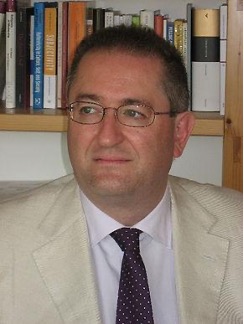
Giuseppe Giordan is Professor of Sociology in the Department of Philosophy, Sociology, Education and Applied Psychology at University of Padua (Italy).

This post is a part of a series on the sociology of religious freedom.

The book A Sociology of Religious Freedom coauthored by Olga Breskaya, Giuseppe Giordan, and James T. Richardson invites readers to explore how individuals understand and practice their personal freedom of choice in matters of religion or belief. At its core, the volume looks at how social institutions either create or fail to create the conditions that allow individuals and groups to exercise religious freedom, and what kind of conditions make this freedom easier or harder to realize. For instance, can greater religious pluralism lead to more equitable ways for individuals to perceive and exercise their religious freedom? What roles do religious and judicial institutions play in shaping individuals’ perception and religious exercise, and how do relationships between religion and the state influence them? And perhaps the most complex question of all: how can we measure religious freedom across societies, when it means such different things to different people and groups?

(more…)

Continue ReadingThree Aims of Sociology of Religious Freedom: Toward a New Paradigm of Religious Change

Sociology of Religious Freedom

  • Post published:

In this series, coauthors Olga Breskaya, Giuseppe Giordan, and James T. Richardson provide insights from their 2025 monograph A Sociology of Religious Freedom. They define religious freedom as a multidimensional concept, located at the intersection of five areas of meaning: (a) the autonomy of individuals and religious groups, (b) the societal value of freedom of and from religion, (c) the normative principles of state-religion governance, (d) international human rights standards, and (e) the socio-legal impacts of the judicialization of religion. The combination of social and legal perspectives enriches both sociologists and lawyers with a better understanding of how religious freedom operates in a time of secularization and pluralization of Western societies.

Giordan’s post sets up the theory of religious freedom and explains the aims of sociological studies of this human right. Borrowing from legal sociology, Richardson’s post focuses on the judicialization of religious freedom and the roles of American and European courts in shaping its scope and limits. Breskaya’s contribution discusses empirical methods of investigating religious freedom.

(more…)

Continue ReadingSociology of Religious Freedom