
Tag: Religion and Constitution

The Philosophical Antecedent of a Thomistic Debate on Human Rights: Revisiting the Maritain–De Koninck Controversy
  • Post published:

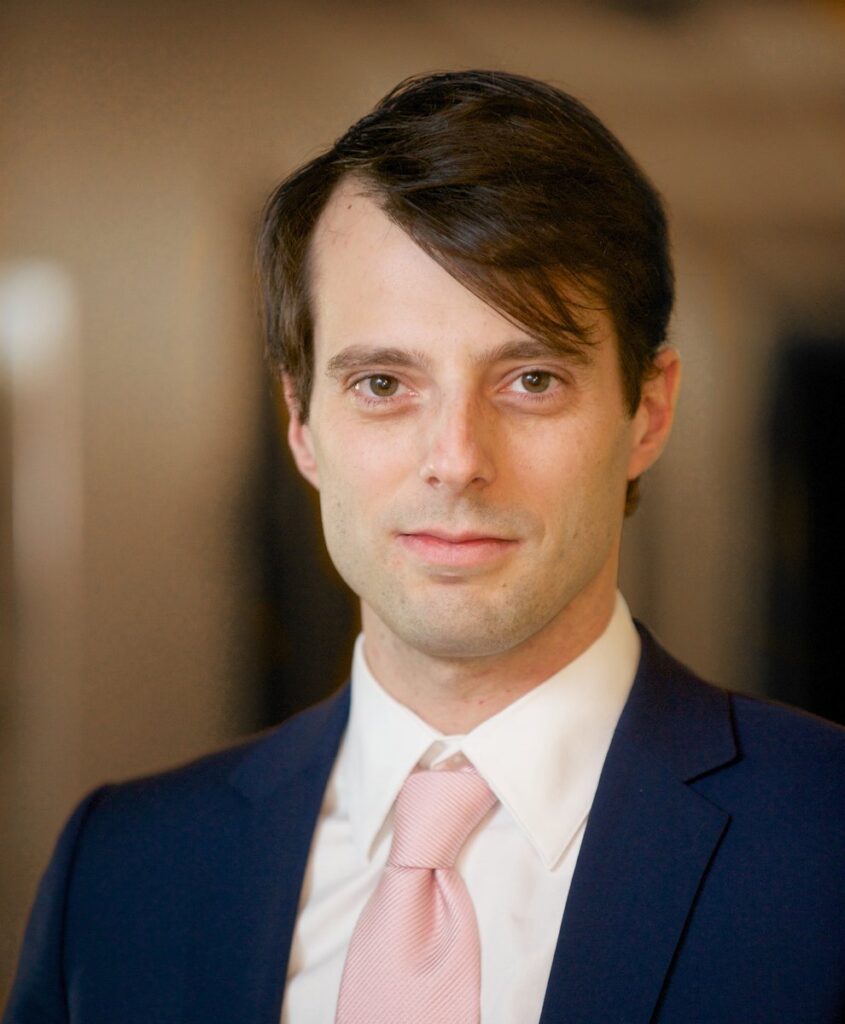
Maxime St-Hilaire is a full professor in the Université de Sherbrooke Faculty of Law.

Introduction

The conventional narrative holds that human rights and their incorporation into positive law represent the culmination of a juridical “modernity” that, at a foundational level, replaced the “classical” natural law of the common good (grounded in the objective order of a plurality of political communities) with the subjective rights of the universal individual. One may thus be struck by the singularity of Jacques Maritain: a Thomist who nevertheless became one of the principal architects of the mid-twentieth-century “human rights revolution.” John Finnis, however, offers a reading of Thomas Aquinas according to which Aquinas not only delineated limits on state authority, embraced the ideal of liberty under the rule of law, and anticipated Lon Fuller’s desiderata of the rule of law but also foreshadowed the very idea of human rights.


(more…)

Continue ReadingThe Philosophical Antecedent of a Thomistic Debate on Human Rights: Revisiting the Maritain–De Koninck Controversy

The Great Divorce: The Western Disagreement About Constitutionalism

  • Post published:

Andrea Pin is a full professor of comparative public law at University of Padova (Italy).

“Well, that is a plan. I am perfectly ready to consider it. Of course . . . . I should want a guarantee that you are taking me to a place where I shall find . . . an atmosphere of free inquiry . . . .”


“No,” said the other. . . . “No atmosphere of inquiry, for I will bring you to the land not of questions but of answers, and you shall see the face of God.”


“Ah, but we must all interpret those beautiful words in our own way! For me there is no such thing as a final answer. The free wind of inquiry must always continue to blow through the mind, must it not? . . . [T]o travel hopefully is better than to arrive.”

—C.S. Lewis, The Great Divorce

Introduction

The wave of narratives that are increasingly questioning, challenging, or even dismantling some of the fundamentals of liberal democracies in the West has many names, including illiberalism, populism, and authoritarianism, among others. The growing body of scholarship aimed at vindicating liberalism—from Cass Sunstein to Michael Walzer to Francis Fukuyama, just to name a few—confirms its impact. Interestingly, this wave has often found purchase among Christians and especially Catholics, who reject liberal constitutionalism for various, and sometimes varying, reasons. However, one charge purports to strike at the core of liberalism: its individual-centered, freedom-based approach.

(more…)

Continue ReadingThe Great Divorce: The Western Disagreement About Constitutionalism

The Varieties of Religious Experience: A Philosophically Pragmatic Account of Church-State Constitutional Arrangements

  • Post published:

David Kenny is Professor in Law and Fellow at Trinity College Dublin. This post is based on a presentation given at “The Role of Religion in Constitutional Identity,” a workshop cosponsored by the ICLRS, Bar-Ilan University’s Faculty of Law, and the Journal of Law, Religion and State at Christ Church, University of Oxford, 15–16 July 2026.

This post explores the question of whether, and in what conditions, a state might establish an official religion while still guaranteeing freedom for minority religions. I address this question by advancing a (very brief) case for an approach to church-state arrangements and religious freedom based on philosophical pragmatism that offers a clear—if not necessarily immediately helpful—answer. The please excuse the fact that the arguments presented below are necessarily succinct, due to the constraints of the blog format.

(more…)

Continue ReadingThe Varieties of Religious Experience: A Philosophically Pragmatic Account of Church-State Constitutional Arrangements