

Alexis de La Ferrière is a lecturer of sociology at Royal Holloway, University of London.
Human flourishing depends on the interplay of individuation and communion—on the capacity of persons to develop as individual moral agents while doing so through relationships and shared forms of life. A well-ordered society must therefore protect both the freedom of the person and the associational ecology in which persons are formed, collaborate with others, and pursue shared goods. Religious freedom is particularly important in this respect. It protects not only individual conscience but also the institutions, communities, and collective practices through which persons may encounter and inhabit accounts of the good that are inherited or discovered, independent of the state.
A society concerned with these conditions of flourishing must resist both political indifference and political overreach. It cannot simply leave persons to pursue their preferences within a thin framework of non-interference, because flourishing depends on the social and associational conditions in which persons develop. But neither can public authority determine in advance the form flourishing should take. The ultimate fulfillment of the human person lies beyond politics: it belongs to religion and eschatological hope, however one conceives of these, not to the administrative functions of the state. The state or any other coercive authority cannot manufacture transformative flourishing, and any attempt to do so risks reducing inward transformation to external conformity. The proper task of politics is more limited but no less important: to secure the individual and associational conditions in which persons remain capable of genuine transformation.
This political arrangement can be described as a politics of metanoia—one that seeks to sustain the possibility of genuine transformation without determining in advance the ends toward which persons and communities must develop.
Metanoia and Flourishing
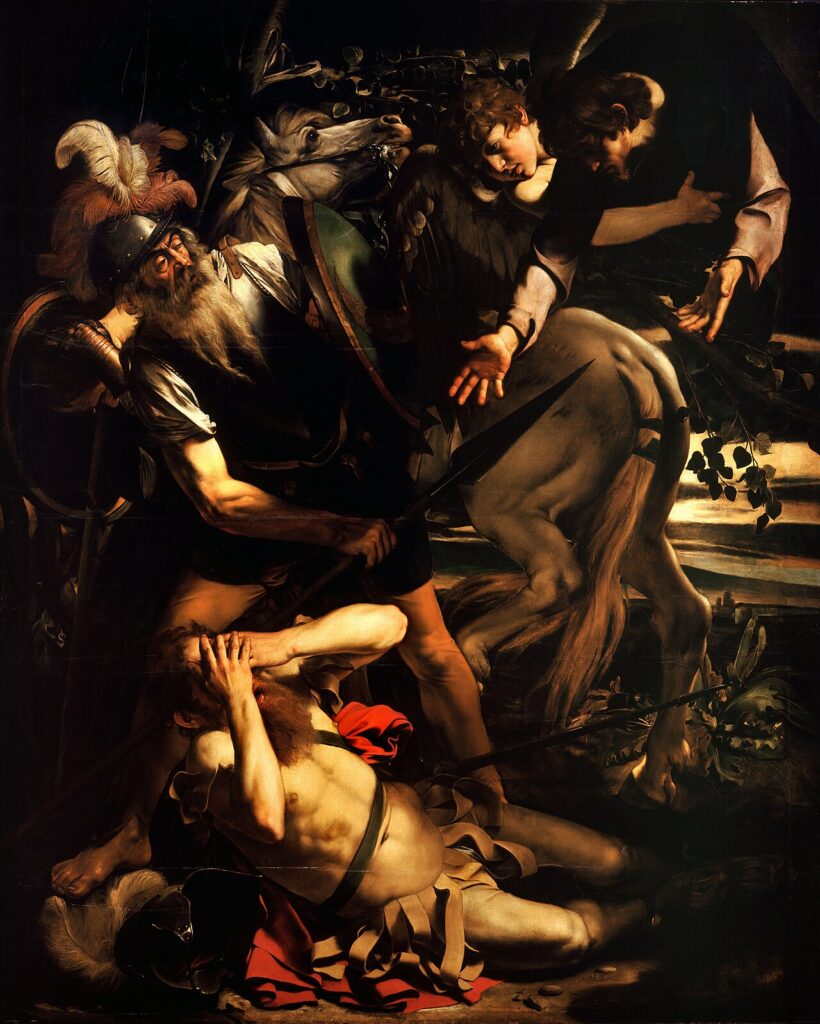
At its most basic level, metanoia denotes a change of mind. Trying to understand what this change consists of, and the means by which it may be cultivated, is a perennial topic of reflection. Pierre Hadot held that “the idea of conversion represents one of the constitutive notions of Western consciousness and conscience. In effect, one can represent the whole history of the West as a ceaseless effort at renewal by perfecting the techniques of conversion, which is to say the techniques intended to transform human reality.”[1] People of course continually experience all sorts of trivial changes of mind, such as a minor revision of preference. But what matters for any account of flourishing is something more profound, such as a radical reorientation of one’s life, as in the paradigmatic case of Paul on the road to Damascus. Human beings do not simply need space to choose among options; they need to be capable of real transformation: recognizing errors, revising attachments, adopting new practices, etc. A society that protects only preference-satisfaction without forming persons capable of such reorientation is not ordered to flourishing.
In his more recent survey of the concept, Adam Ellwanger traces three successive notions of metanoia:
- a classical form of metanoia as a rhetorical figure signifying a revision, correction, or retraction in speech or writing, where a speaker alters an expression in order to sharpen or intensify it;
- a Christian spiritual form especially associated with conversion, repentance, and inward reorientation before God;
- and a modern secularized form tied to modern ideals of authenticity, self-discovery, and personal reinvention.[2]
It is the latter two that are closer to the notion I have in mind—but my account can accommodate either a transcendental or a secularized version of metanoia. What matters here is the more general claim that flourishing depends on the capacity for metanoic change in some form, that such change cannot be understood as a purely private or interior event, and that a well-ordered society must therefore safeguard and encourage the conditions under which it can occur. Indeed, the freedom to pursue and embody different ideals of metanoia is itself one mark of a just society.
At the same time, metanoia cannot be reduced to a liberal notion of atomistic self-definition. Genuine transformation presupposes freedom because what is coerced cannot be conversion in any meaningful sense. Conscience must be able to judge, and persons must possess enough independence to act on that judgement. This is one reason religious freedom is so important to a politics of metanoia: it protects the space in which conscience may judge and persons may respond to claims about the good that are not imposed by public authority.
Yet the self does not form ex nihilo. It is shaped by communal interactions. That is why the freedom required for metanoia is not freedom from all formative claims but freedom within a social ecology rich enough to sustain growth. Liberal autonomy, when severed from such an ecology, can give rise to anomie. But an excessively rigid and doctrinaire order fails for the opposite reason: it suppresses the interior work of conscience and mistakes conformity for transformation.
Development Without Stasis
John Henry Newman’s account of the development of Christian doctrine provides an illuminating analogue. For Newman, “All systems which have life, have a development, yet do not cease to have an identity though they develop.”[3] This was the nut of Newman’s famous attempt to reconcile the principle of doctrinal truth with the evidential observation of historical change: he sought to understand how living truth unfolds through time without dissolving into mere novelty. “The development . . . of an idea,” he writes elsewhere, “is carried on through and by means of communities of men and their leaders and guides; and it employs their minds as its instruments, and depends upon them, while it uses them.”[4] The point for Newman is not that all change is good, still less that novelty is an end in itself. Development on his view remains accountable to a series of tests, notably that of the continuity of principle. Mutatis mutandis, Newman’s formulation offers a decisive corrective to political ideals of stasis. What is alive develops; what is merely fixed is dead.
A just political order should therefore neither freeze persons and institutions into rigid forms nor abandon them to indiscriminate flux. Rather, it should sustain the conditions under which individual and collective transformation can occur in ways that preserve continuity, invite judgment, and remain open to renewal. Like Newman’s tests for discerning between true developments and heresies, a society must debate within itself which forms of individual and collective change are healthy and just, and which are dangerous and illegitimate; one of those tests surely being the continuity principle of whether a transformation opens up to further avenues of development or whether it leads down a rigid cul-de-sac of authoritarian or psychological stasis.
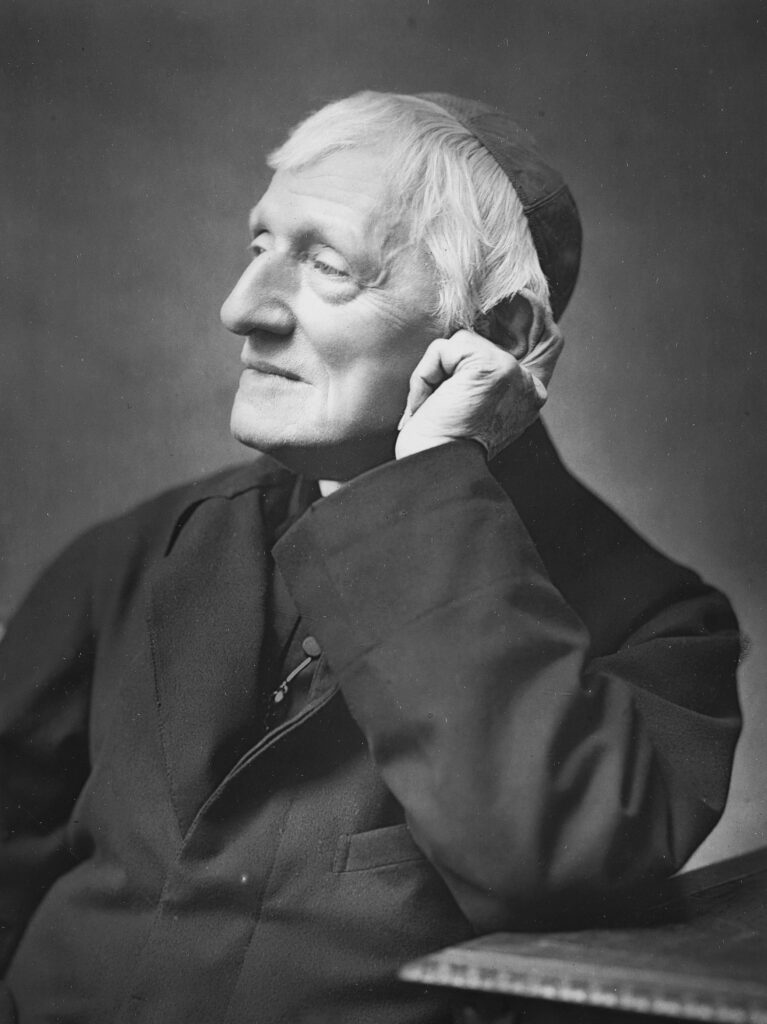
Yet this raises a further question. If metanoic development is the proper horizon of a well-ordered society, through what social forms does such development actually occur? Newman’s own account already points toward the answer, for development is carried “through and by means of communities of men and their leaders and guides.” Metanoia, too, must be understood not only as an inward event of conscience but as a process sustained through relations, practices, and institutions, and through forms of leadership and authority rooted in them.
The Politics of Metanoia
Metanoia is therefore both personal and social. It is personal because no one can repent or convert in another’s place, nor force transformation on another. But it is social because no one can sustain transformation alone. The turning of the person depends on engagement with others through association and shared endeavors. The capacity to associate is not merely a technique for getting things done. Through common undertakings, persons learn the disciplined use of freedom; they acquire the habits that permit a moment of conversion to become a durable form of life.
A society ordered toward metanoia will therefore differ both from classical/libertarian liberalism and from its perfectionist rivals.
Against the former, associated in different ways with John Stuart Mill, Isaiah Berlin, and Robert Nozick, it denies that politics can be understood chiefly as the protection of non-interference, private choice, or a minimal framework of rights within which individuals pursue their own ends. Such views are right to resist coercive overreach, but they remain too thin to account for the social and associational conditions under which flourishing becomes possible in the first place. The politics of metanoia insists, by contrast, that flourishing requires moral formation, associational depth, and common purposes and that public authority cannot be indifferent to the preservation of those conditions.
But the politics of metanoia also rejects perfectionist views according to which public authority may rightly articulate and enforce a comprehensive account of the good. This applies both to the liberal perfectionism of Joseph Raz, who held that the state may promote worthwhile activities and ways of life provided it does so by non-coercive means, and to the common-good constitutionalism advanced by Adrian Vermeule, according to whom officials have a duty to promote the common good in a manner consistent with their offices.
Instead, my position insists on the duty of public officers to safeguard the conditions of metanoia, the contours of which are properly articulated and pursued by persons themselves through autonomous intermediary bodies such as families, churches, clubs, guilds, and small enterprises. Further, the politics of metanoia is anti-utopian in that it does not look to public authorities to install a final settlement; it insists that politics belongs to an imperfect temporal order and that its aims are never fully accomplished. As per Samuel Beckett’s bitter-sweet observation “Ever tried. Ever failed. No matter. Try again. Fail again. Fail better”.
The politics of metanoia thus assigns a different task to public authority from these influential schools of thought: not neutrality, not autonomy-promotion, and not magisterial instruction, but the protection of a genuinely plural social ecology in which persons and communities may pursue their own shared understandings of the good without being crowded out by the state itself, by concentrated market power, or by a culturally dominant oligarchy of actors. Religious freedom is a central part of such an ecology, protecting both conscience and the autonomy of communities to pursue goods not authored by the state. The common good on this view is neither dismissed as private preference nor crystalized as a final worldly completion but seen as a living and developing corpus sustained through the preservation of a social ecology in which persons can undergo transformation with and through others.
References:
[1] Pierre Hadot, Conversion, ENCYCLOPÉDIE DES RELIGIONS (1968).
[2] ADAM ELLWANGER, METANOIA: RHETORIC, AUTHENTICITY, AND THE TRANSFORMATION OF THE SELF (The Pennsylvania State University Press 2020).
[3] EAMON DUFFY, JOHN HENRY NEWMAN: A VERY BRIEF HISTORY 35 (SPCK 2019) (quoting Letter from John Henry Newman to F. W. Newman (10 Nov. 1840), in 7 LETTERS AND DIARIES OF JOHN HENRY NEWMAN, 436, 441 (Oxford University Press 1995)).
[4] JOHN HENRY NEWMAN, AN ESSAY ON THE DEVELOPMENT OF CHRISTIAN DOCTRINE 38 (William S. Hein & Co. 1878).