
Tag: Liberalism

The Great Divorce: The Western Disagreement About Constitutionalism
  • Post published:

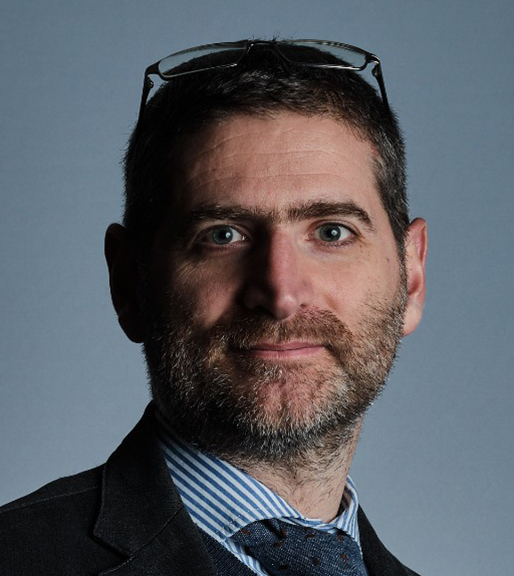
Andrea Pin is a full professor of comparative public law at University of Padova (Italy).

“Well, that is a plan. I am perfectly ready to consider it. Of course . . . . I should want a guarantee that you are taking me to a place where I shall find . . . an atmosphere of free inquiry . . . .”


“No,” said the other. . . . “No atmosphere of inquiry, for I will bring you to the land not of questions but of answers, and you shall see the face of God.”


“Ah, but we must all interpret those beautiful words in our own way! For me there is no such thing as a final answer. The free wind of inquiry must always continue to blow through the mind, must it not? . . . [T]o travel hopefully is better than to arrive.”

—C.S. Lewis, The Great Divorce

Introduction

The wave of narratives that are increasingly questioning, challenging, or even dismantling some of the fundamentals of liberal democracies in the West has many names, including illiberalism, populism, and authoritarianism, among others. The growing body of scholarship aimed at vindicating liberalism—from Cass Sunstein to Michael Walzer to Francis Fukuyama, just to name a few—confirms its impact. Interestingly, this wave has often found purchase among Christians and especially Catholics, who reject liberal constitutionalism for various, and sometimes varying, reasons. However, one charge purports to strike at the core of liberalism: its individual-centered, freedom-based approach.

(more…)

Continue ReadingThe Great Divorce: The Western Disagreement About Constitutionalism

Liberal and Post-liberal Religious Freedom in Church Employment: An Appraisal of the Strasbourg’s Case Law

  • Post published:

Matteo Corsalini is a postdoctoral researcher at the University of Siena (Italy), Department of Social, Political and Cognitive Sciences. This post is based on a presentation given at the ICLRS 32nd Annual International Law and Religion Symposium, 6 October 2025.

In its first, 1993 decision on freedom of religion or belief (FoRB), Kokkinakis v. Greece, the European Court of Human Rights (ECtHR) famously held that FoRB is “one of the most vital elements that go to make up the identity of believers and their conception of life” (para. 31). The Court further clarified that, beyond protecting traditionally religious concerns, FoRB is also “a precious asset for atheists, agnostics, skeptics and the unconcerned” and thus overall a “matter of individual conscience” (para. 31). By employing such phrasing, the ECtHR appeared to ground the rationale for FoRB protection in wider concerns of individual self-determination—including through adherence to multiple, and at times unconventional, religions, or even to none. In this sense the ECtHR may be said to have developed a “generally liberal approach”[1] to FoRB—an orientation that the Court has repeatedly exhibited since Kokkinakis. Building on this precedent, the Court has in fact underscored the primacy of individual self-expression in religious matters, clarifying that FoRB protection should also cover religiously inspired practices that are not explicitly mandated by religious authorities and official dogma (see Eweida & Others v. UK, para. 81). In other words, what matters for the protection of idiosyncratic religious practices—the Court has clarified—is assessing whether they attain a certain level of “cogency, seriousness, cohesion and importance” for the individual believer only (see Bayatyan v. Armenia, para. 110).

(more…)

Continue ReadingLiberal and Post-liberal Religious Freedom in Church Employment: An Appraisal of the Strasbourg’s Case Law

Deaton, Deenen, and Integrity and Role of Catholic Social Teaching

  • Post published:

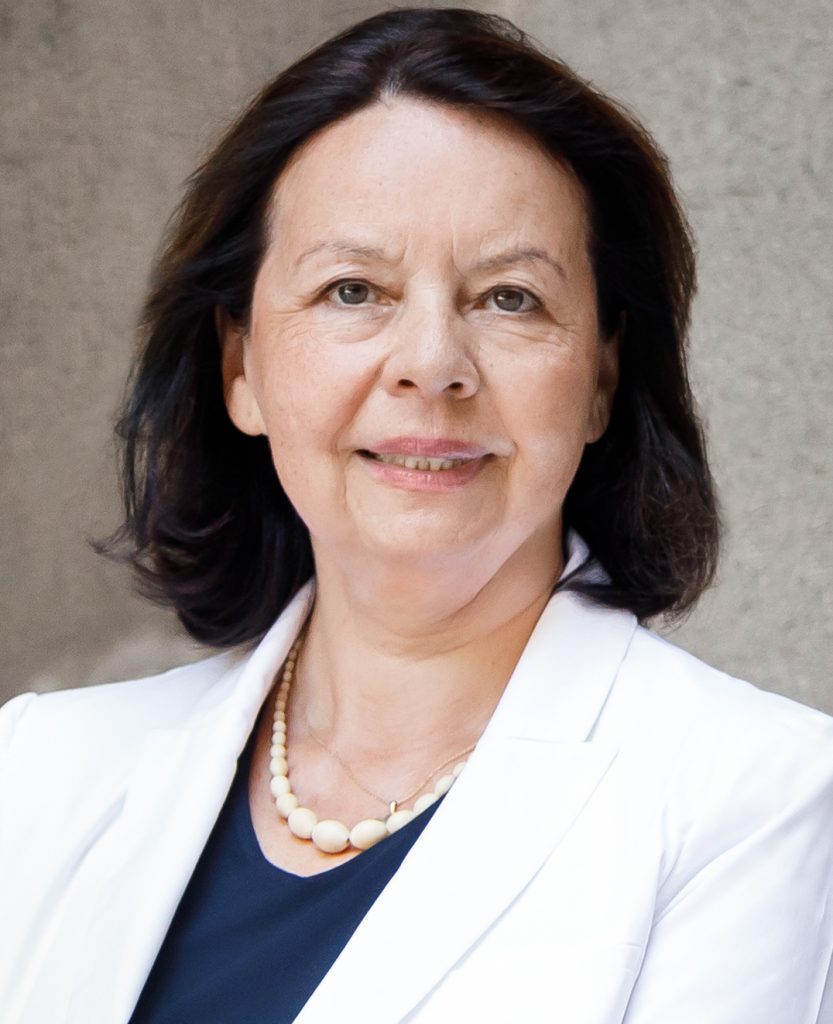
Ingeborg G. Gabriel is a professor emerita at the University of Vienna.

The debate in the United States and beyond on liberalism has taken a rather disconcerting turn, in which concepts from Catholic Social Teaching (CST) are invoked. The following post is an attempt to sketch this phenomenon drawing on ideas of economist Angus Deaton and philosopher Patrick Deneen. Can CST, which is also high on the agenda of the present pontiff Leo XIV, cut a trail through the jungle of these ideas?

(more…)

Continue ReadingDeaton, Deenen, and Integrity and Role of Catholic Social Teaching