Greek Tragedy: Gideon Sapir on Why He Is Now Critical of the Israeli Supreme Court’s Decisions on Religious Exemption from Military Service

In Rubinstein v. The Minister of Defense (1998) and several subsequent cases, the Israeli Supreme Court invalidated executive branch administrative acts and Knesset laws granting exemptions from military service for ultra-Orthodox Jewish Yeshiva students. In its reasoning, the Supreme Court mainly referred to separation-of-power and equality issues. While he initially supported some of these decisions, Gideon Sapir (Bar-Ilan University) eventually changed his opinion for several reasons explained in this video.

(more…)

Continue Reading Greek Tragedy: Gideon Sapir on Why He Is Now Critical of the Israeli Supreme Court’s Decisions on Religious Exemption from Military Service

Conscientious Objection to the Military Service: A Right in Progress

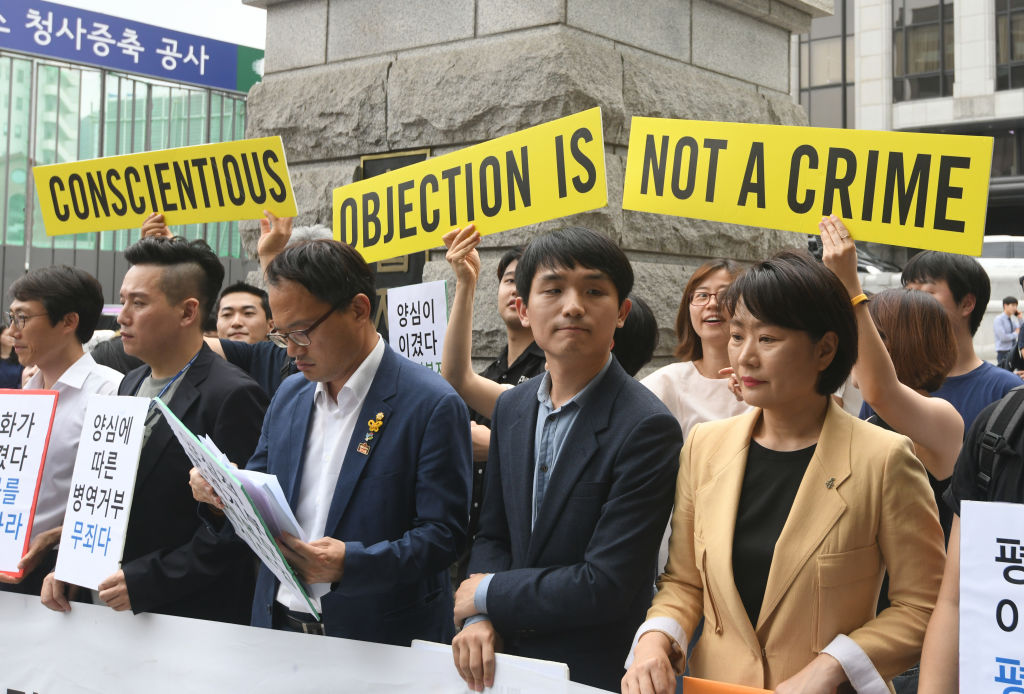
The right to conscientiously object to the military service is well established in international law and “can be derived from the right to freedom of thought, conscience and religion or belief.” However, in many countries across the globe, believers of different religions and belief systems continue to face challenges in gaining access to alternative service and, more broadly, practicing their belief not to bear arms and participate in military service.

Photo by Amnesty International

This blog series provides case studies that illustrate such challenges in various contexts. Mine Yildirim discusses the heavy long-term legal and social consequences that non-recognition of objectors’ rights produces in Turkey. Ihntaek Hwang explains why the South Korean approach to alternative service remains punitive and aims to sanction those refusing to be conscripted. Nikolay Honhannisyan demonstrates on the selectiveness of the Armenian government in providing the right to object to believers of different religions. Moshe Jaffe shows how the Israel/Gaza war has changedthe debates over and the legal framework of the exemption for yeshiva students from ultra-Orthodox Jewish communities. Finally, Paola Goulart de Souza Spikes elaborates on why the Brazilian constitution does not allow exemptions from military service during war time.

(more…)

Continue Reading Conscientious Objection to the Military Service: A Right in Progress

Fairness or Failure? The Punitive Nature of South Korea’s Alternative Service

Ihntaek Hwang is an affiliated researcher at the Tampere Peace Research Institute (TAPRI) in Finland.

Since 1951, South Korea has conscripted all physically eligible males over the age of 18. For more than half a century, the South Korean state imprisoned conscientious objectors in large numbers lest they “jeopardize the military and, hence, the vital common interest of national security upon which the constitutional rights and freedoms of individuals stand.”[1] As of 2017, around 19,000 South Korean men had been imprisoned for refusing military service, most of whom received a sentence of 18 months. South Korean conscientious objectors even accounted for more than 90% of those imprisoned worldwide for conscientious objection.

(more…)

Continue Reading Fairness or Failure? The Punitive Nature of South Korea’s Alternative Service