Skip to content
Talk About: Law and Religion
  • Posts
    • Israel’s Death Penalty Law: “Jewish and Democratic”?
    • The EUCJ Ruling in Katholische Schwangerschaftsberatung v. JB and Its Impact on Ecclesiastical Labor Law in Germany
    • Women and Church Governance: What Pope Francis’s Reform Changed—and What it Left Open
    • Voicing Sharp Religious Opposition to the War in Iran: A Case Study from the Roman Catholic Community
    • Preserving Religious Cultural Heritage: Invoking Perspectives on Human Dignity and the Virtues of Religious Freedom
    • Clashing Vulnerabilities? Revisiting Executief van de Moslims in België and Others v. Belgium with Vulnerability Theory
    • Armenia’s State-Church Relations: Not Much Room for Optimism
  • Conversations
    • Magnifica Humanitas: Human Dignity, Technology, and the International Order
    • Sociology of Religious Freedom
    • Religious Freedom and Indigenous Rights: Global Perspectives
    • Religious Law and Human Rights
    • The Naming of Religious Groups: A Human Rights Analysis
    • Pope Francis and His Legacy in Theology, Canon Law, Interreligious Dialogue, and Religious Leadership
    • Conscientious Objection to the Military Service: A Right in Progress
    • Marking the 10th Anniversary of the Yazidi Genocide
    • See All
  • Videos
    • Michalyn Steele on Why the Progeny of Bowen v. Roy Changed Her View of the Original 1986 Case
    • Two Words: Why Frank Ravitch No Longer Supports the Overturning of Employment Division v. Smith
    • Brett G. Scharffs on the Evolution of His Thinking About Refah Partisi v. Turkey
    • Illiberal Democracies and Religion: Interview with Renáta Uitz
    • Measuring Religious Freedom Globally: Interview with Jonathan Fox
    • Moving Toward Anti-Separation of Religion and State: Frank Ravitch on the Current U.S. Supreme Court
    • Standing Up for Everyone, Standing by the Vulnerable: An Interview with Brett Scharffs and Elizabeth Clark
  • Interviews
    • Ukraine’s Church-State Relationship May Be Changed Significantly: Interview with Dmytro Vovk
    • Walking the Walk for Everyone in the Community: Andrea Schneider on Religion, Gender, and Negotiation in Jewish Communities
    • Ori Aronson on Religion and the Constitutional Crisis in Israel
    • Nazila Ghanea on Religious Freedom and Gender Equality as Non-Clashing Rights
    • András Sajó on Religious Freedom, Constitutionalism, and Democracy in the Jurisprudence of the Strasbourg Court
    • Religious Freedom: Toward a Pluralist Understanding
    • Brett Scharffs on Teaching Law and Religion Globally
    • Catherine Wanner on Religion in Post-Communist Countries
  • Podcast
    • Justice and Accountability for the Yazidi Genocide Ten Years On
    • The Russian World Narrative and the Russian aggression in Ukraine
    • Business and Religious Rights
    • Qur’an-Burning Cases in Europe
  • More
    • Subscribe
    • About
Menu Close
  • Posts
    • Israel’s Death Penalty Law: “Jewish and Democratic”?
    • The EUCJ Ruling in Katholische Schwangerschaftsberatung v. JB and Its Impact on Ecclesiastical Labor Law in Germany
    • Women and Church Governance: What Pope Francis’s Reform Changed—and What it Left Open
    • Voicing Sharp Religious Opposition to the War in Iran: A Case Study from the Roman Catholic Community
    • Preserving Religious Cultural Heritage: Invoking Perspectives on Human Dignity and the Virtues of Religious Freedom
    • Clashing Vulnerabilities? Revisiting Executief van de Moslims in België and Others v. Belgium with Vulnerability Theory
    • Armenia’s State-Church Relations: Not Much Room for Optimism
  • Conversations
    • Magnifica Humanitas: Human Dignity, Technology, and the International Order
    • Sociology of Religious Freedom
    • Religious Freedom and Indigenous Rights: Global Perspectives
    • Religious Law and Human Rights
    • The Naming of Religious Groups: A Human Rights Analysis
    • Pope Francis and His Legacy in Theology, Canon Law, Interreligious Dialogue, and Religious Leadership
    • Conscientious Objection to the Military Service: A Right in Progress
    • Marking the 10th Anniversary of the Yazidi Genocide
    • See All
  • Videos
    • Michalyn Steele on Why the Progeny of Bowen v. Roy Changed Her View of the Original 1986 Case
    • Two Words: Why Frank Ravitch No Longer Supports the Overturning of Employment Division v. Smith
    • Brett G. Scharffs on the Evolution of His Thinking About Refah Partisi v. Turkey
    • Illiberal Democracies and Religion: Interview with Renáta Uitz
    • Measuring Religious Freedom Globally: Interview with Jonathan Fox
    • Moving Toward Anti-Separation of Religion and State: Frank Ravitch on the Current U.S. Supreme Court
    • Standing Up for Everyone, Standing by the Vulnerable: An Interview with Brett Scharffs and Elizabeth Clark
  • Interviews
    • Ukraine’s Church-State Relationship May Be Changed Significantly: Interview with Dmytro Vovk
    • Walking the Walk for Everyone in the Community: Andrea Schneider on Religion, Gender, and Negotiation in Jewish Communities
    • Ori Aronson on Religion and the Constitutional Crisis in Israel
    • Nazila Ghanea on Religious Freedom and Gender Equality as Non-Clashing Rights
    • András Sajó on Religious Freedom, Constitutionalism, and Democracy in the Jurisprudence of the Strasbourg Court
    • Religious Freedom: Toward a Pluralist Understanding
    • Brett Scharffs on Teaching Law and Religion Globally
    • Catherine Wanner on Religion in Post-Communist Countries
  • Podcast
    • Justice and Accountability for the Yazidi Genocide Ten Years On
    • The Russian World Narrative and the Russian aggression in Ukraine
    • Business and Religious Rights
    • Qur’an-Burning Cases in Europe
  • More
    • Subscribe
    • About

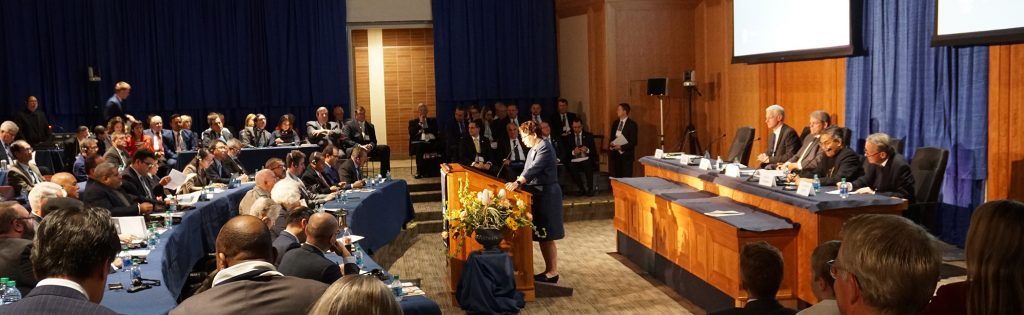
Symposium 2019 Videos:
Opening Session
and Scharffs, Durham, Clark Concluding Remarks

  • Post published:October 11, 2019
  • Opening Sesson (entire)
  • Concluding remarks by Center Director Brett Scharffs
  • Concluding remarks by Founding Director Cole Durham
  • Concluding remarks by Associate Director and Symposium Chair Elizabeth Clark
Facebook0Tweet0LinkedIn0

You Might Also Like

The Applicability of “Grievous Religious Persecution” in International Criminal Law: Response to Werner Nicolaas Nel

April 13, 2021

Clashing Vulnerabilities? Revisiting Executief van de Moslims in België and Others v. Belgium with Vulnerability Theory

February 6, 2026

When the State Tells You How to Run Your Church Service: Analyzing Coronavirus Guidance Documents on Religious Services

October 2, 2020

Recent Posts

  • Magnifica Humanitas: Human Dignity, Technology, and the International Order
  • Magnifica Humanitas and the Organic Evolution of Catholic Social Teaching on Online Exploitation
  • Magnifica Humanitas: An Ethics for AI and a Substantive New Pillar of Catholic Social Doctrine
  • What Do You Say AI Am?: The Anthropological Revolution of Magnifica Humanitas
  • Magnifica Humanitas: Rejecting Babel and Building Peace

Tags

Artificial intelligence Autocephaly Catholic Church Catholicism Chile Church-State Relations Constitutional Space COVID-19 Digitalization Discrimination Fratelli tutti Freedom of Expression Gender Gender Equaility Genocide Human Dignity Humanitarian Aid Human Rights Interfaith Dialogue International Religious Freedom Israel Jewish Law LGBTI+ Marriage Minorities Peacebuilding Politics and Religion Pope Francis Pope Leo XIV Refugee Religion and Constitution Religion and Judging Religion and War Religious Autonomy Religious Freedom Religious Law Religious persecution Russia Russian Orthodox Church Russian World Secularity Security U.S. Supreme Court Ukraine Ukrainian Orthodox Church

Subscribe for Monthly Newsletter

Recent Posts

  • Magnifica Humanitas: Human Dignity, Technology, and the International Order July 18, 2026
  • Magnifica Humanitas and the Organic Evolution of Catholic Social Teaching on Online Exploitation July 18, 2026
  • Magnifica Humanitas: An Ethics for AI and a Substantive New Pillar of Catholic Social Doctrine July 18, 2026
  • What Do You Say AI Am?: The Anthropological Revolution of Magnifica Humanitas July 18, 2026
  • Magnifica Humanitas: Rejecting Babel and Building Peace July 18, 2026
  • From Dignitatis Humanae to Magnifica Humanitas: Disarming AI to Protect Freedom of Conscience July 18, 2026
  • Israel’s Death Penalty Law: “Jewish and Democratic”? May 14, 2026
  • Michalyn Steele on Why the Progeny of Bowen v. Roy Changed Her View of the Original 1986 Case May 13, 2026
  • Women and Church Governance: What Pope Francis’s Reform Changed—and What it Left Open April 30, 2026
  • Education and Freedom of Religion or Belief: An Essential Relationship April 24, 2026

Topics

Artificial intelligence Autocephaly Catholic Church Catholicism Chile Church-State Relations Constitutional Space COVID-19 Digitalization Discrimination Fratelli tutti Freedom of Expression Gender Gender Equaility Genocide Human Dignity Humanitarian Aid Human Rights Interfaith Dialogue International Religious Freedom Israel Jewish Law LGBTI+ Marriage Minorities Peacebuilding Politics and Religion Pope Francis Pope Leo XIV Refugee Religion and Constitution Religion and Judging Religion and War Religious Autonomy Religious Freedom Religious Law Religious persecution Russia Russian Orthodox Church Russian World Secularity Security U.S. Supreme Court Ukraine Ukrainian Orthodox Church

Blog Editors

Co-editors:

Dmytro Vovk, Director, Center for the Rule of Law and Religion Studies, Yaroslav Mudryi National Law University, Kharkiv, Ukraine

Amy Andrus, Associate Director, International Center  for Law and Religion Studies

Contributing editors:

Jane Wise, Associate Director, International Center  for Law and Religion Studies

Donlu Thayer (blog originator), Senior Fellow, International Center for Law and Religion Studies

Contact Us

452 J. Reuben Clark Building
Brigham Young University
Provo, UT 84602
USA
801.422.6842
[email protected]

Please Note

The opinions expressed in the posts on this website do not necessarily represent the opinions of the faculty or staff of the International Center for Law and Religion Studies or the J. Reuben Clark Law School, or of Brigham Young University or its sponsoring church.