

Isabella Sargsyan is an expert on freedom of religion or belief based in Yerevan, Armenia, and a past member of the OSCE/ODIHR Panel of Experts on FoRB (2016–18, 2023–25).
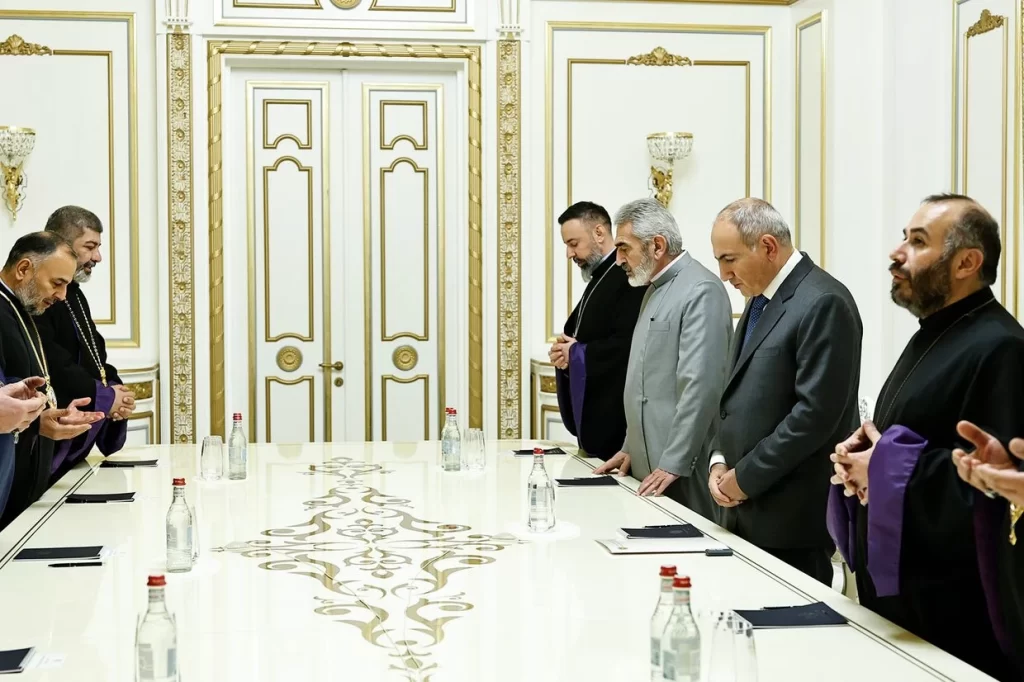
On 5 January 2026 Armenia’s Prime Minister, Nikol Pashinyan, formally launched what he described as a reform of the Armenian Apostolic Church (hereinafter the Church or Armenian Church, interchangeably), reading a statement at his residence in the presence of 10 senior clergy who had called for the resignation of Catholicos of All Armenians Garegin II, the Church’s supreme head. The document—which Pashinyan signed in his capacity of Prime Minister—outlined a roadmap for the implementation of reforms, including the removal of the current Catholicos and the formation of a Coordinating Council comprised of Pashinyan and the above-mentioned clerics. This roadmap purportedly addresses perceived failures of Church leadership and condemns the “uncanonical practice of involving the Church in politics and using it to serve various agendas and interests.”
Previously, independent media reported that the Prime Minister and state security structures had actively sought to influence religious practices within the Church. In late 2025, Pashinyan confirmed that the Armenian National Security Service instructed some clergy not to commemorate the Catholicos of All Armenians by name during liturgies he attended, a practice that contravenes established canon law. Many priests have resisted these directives, with clergy in the Shirak Diocese reaffirming their allegiance to the Catholicos and condemning state pressure as illegitimate. Civil society organizations and human rights watchdogs have also condemned the government’s actions, describing them as unlawful interference in the Church’s internal affairs and a violation of freedom of religion or belief (FoRB) standards.
This post does not address the situation from a political point of view, nor does it address the Church’s internal issues. Rather, it highlights tension between government narratives and international FoRB standards and core principles of the rule of law by focusing on arguments and narratives put forward by the government to justify its actions toward the Church and to shape public perceptions domestically, within the diaspora, and among international partners, particularly the European Union.
Argument One: Legal
In the course of the ongoing feud, the Church has been accused of violating Article 17 of the Constitution of Armenia—which establishes the principle of separation of Church and State—by openly criticizing Prime Minister Pashinyan’s government. These criticisms have focused on the Catholicos of All Armenians’ official calls for Pashinyan’s resignation following Armenia’s defeat, and the ethnic cleansing of Armenians, in Nagorno-Karabakh. Similarly, the Church has been accused of violating Article 17 in connection with Bishop Bagrat Galstanyan’s leadership of the Holy Struggle, a political movement that demanded the resignation of Pashinyan and his administration.
Although the Church’s vocal anti-government position might appear controversial from a political or ethical perspective—particularly given the Church’s traditional loyalty to previous Armenian governments and general reluctance to intervene in a range of important domestic affairs—the government’s argument is untenable from a legal standpoint.
First and foremost, at its core, the principle of separation between State and Church does not seek to restrict religious institutions from engaging in political discourse or civic life; religious actors are not, in themselves, barred from involvement in public affairs. Rather, the principal limitation imposed by modern human rights frameworks concerns the actions of the State: the State is prohibited from establishing an official religion or affording preferential treatment to a particular religion, including through the use of public funds to support religious organizations—a prohibition that derives from the broader guarantee of freedom of religion under Article 9 of the European Convention on Human Rights (ECHR), which requires states to respect religious freedom without discrimination and in a manner compatible with democratic pluralism.
Under Armenia’s Constitution, FoRB is protected as a fundamental right (Article 41), and according to the 1991 Armenian Law on Freedom of Conscience and on Religious Organizations, religious institutions are entitled to express opinions on matters of public concern without such expression being construed as violating Article 17. Moreover, Armenia’s obligations under international law, including the ECHR and the jurisprudence of the European Court of Human Rights (ECtHR), reinforce that the State may not restrict the legitimate expression of religious institutions merely because it is critical of government policies. Any claim that the Church or its clergy have exceeded their authority must therefore be evaluated with reference to these legal safeguards, rather than be accepted as true on the basis of political disagreement or ethical judgment. The ECtHR also stipulates that Article 9 of the Convention must be interpreted in light of Article 11, which safeguards associative life against unjustified state interference.
Therefore, the government’s interference in the religious affairs of the Church and its encroachment on the Church’s autonomy constitute clear violations of both the Constitution of Armenia and international law.
Argument Two: Geopolitical
A growing narrative, emanating from the government and Prime Minister, portrays certain members of the Armenian Church as “KGB agents,” allegedly linked to Russian intelligence services and acting in support of Russian interests within the framework of so-called hybrid warfare against Armenian sovereignty. This narrative has gained particular prominence in the context of Russia’s war against Ukraine, geopolitical developments, and the broader reconfiguration of regional security dynamics, with the international community serving as a primary audience for its dissemination. Although there is a high risk of Moscow’s interference in Armenia’s internal affairs, particularly in the context of 2026 parliamentary elections, this argument should be approached critically for two key reasons.
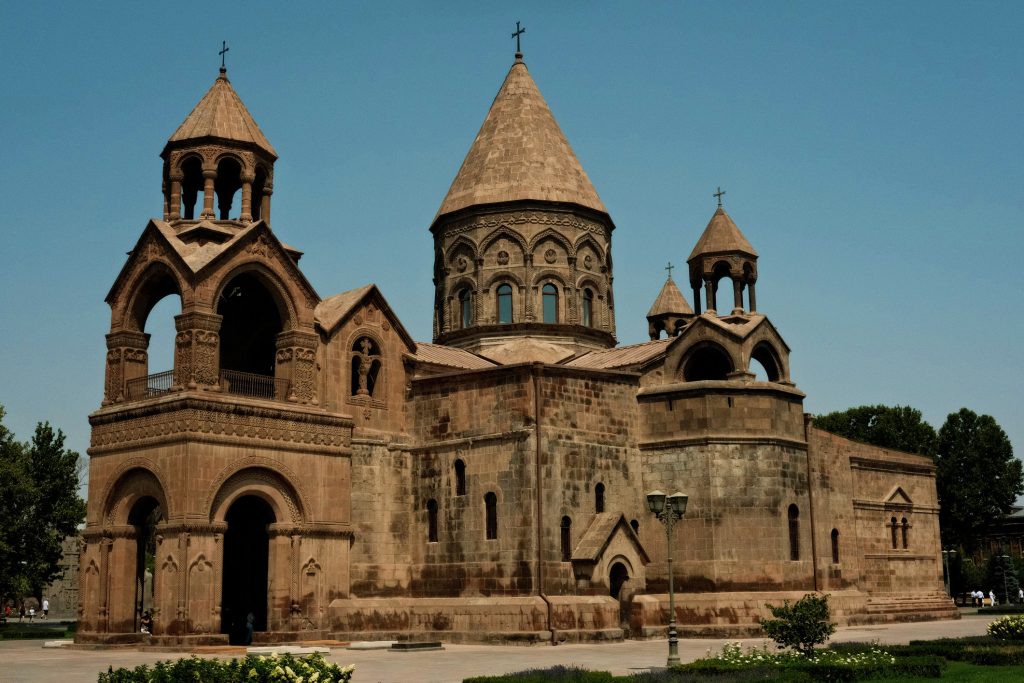
First, allegations of the Church’s links to Russian intelligence or Russia more broadly deserve scrutiny but should not be accepted at face value in the Armenian context. Unlike Orthodox churches in many other post-communist states, the Armenian Church stands entirely independent, with its spiritual center in the Holy See of Etchmiadzin, maintaining no canonical ties with either the Moscow Patriarchate or the Ecumenical Patriarchate of Constantinople, thereby occupying a unique position within the regional ecclesiastical landscape. Due to its diasporic character, the Armenian Church operates in an extraterritorial manner. Under the primacy of Catholicos of All Armenians are the Catholicosate of the Great House of Cilicia (Antelias, Lebanon), the Patriarchates in Constantinople and Jerusalem, and more than 30 dioceses both within Armenia and abroad.
Since at least the late nineteenth century, the Armenian Church has been closely associated with the ecumenical movement, particularly through sustained engagement with Western Protestant churches, most notably with German theological scholarship and the Protestant churches of Germany. In this dynamic intellectual environment, young Armenian students—mostly ordained deacons from the Gevorgyan Seminary of Etchmiadzin—went to Berlin, Leipzig, Halle, Tübingen, and other centers to pursue advanced theological studies and research. From the 1960s onwards, and increasingly after the restoration of Armenia’s independence in 1991, opportunities opened for clergy members to pursue advanced theological education in Germany, Switzerland, the United Kingdom, France, Canada, the United States, and elsewhere. Moreover, many clergy who were born and raised outside Soviet Armenia, within diverse diaspora communities, received their education in prominent universities of Europe, the Middle East, and North America. Hence, the overwhelming majority of bishops in the Armenian Church are Western educated with no clear connections to Russia’s Orthodox environment.
From this perspective, it is both methodologically and practically inappropriate to analyze the Armenian Apostolic Church through the same frameworks and lens of “hybrid threats” commonly applied to Orthodox Churches in post‑communist states. The historical, theological, and institutional context of the Armenian Church is unique, and attempts to transpose analytical models developed for other Eastern Christian contexts risk producing misleading conclusions.
Second, it is now known, thanks to the release of the Mitrokhin papers, that the Soviet KGB recruited clergy from various denominations, including the Armenian Church, to serve its interests. Felix Corley, who did significant research on the Armenian Church during Soviet rule, notes that at least 15 Armenian clergy are named in those papers. It is also highly possible that in the aftermath of the USSR’s collapse, some Armenian clergy were recruited by Russian special services and may have served, or continue to serve, Russian interests. Unfortunately, as Corley states,
It is important to note that ethnic Armenians—like people of any other nationality or ethnicity—also worked for other intelligence agencies, including those of Western countries, during the Cold War.
Indeed, there is a large Armenian diaspora in the Russian Federation, with several sizeable dioceses across the country. Some analysts argue that the Russian Armenian diaspora and the Armenian Church in Russia may act as influencing factors in Armenian-Russian relations and Armenia’s foreign policy orientation. Evidence-based disclosure of such cases would be beneficial for Armenian society.
However, such serious allegations cannot be applied indiscriminately and must be assessed on a case-by-case basis, in full respect of the rule of law and human rights and grounded in verifiable evidence. While discussing such complex issues, researchers and think-tankers must take a nuanced and informed approach. Broad-brush assumptions distort the complex realities of the Armenian Church, its clergy, and its diaspora communities, and fail to account for the Church’s institutional resilience, including its capacity to respond to genuine foreign threats and malign actors. This resilience has been demonstrated throughout the Church’s history, shaped by centuries of survival and by its role in guiding a largely stateless nation while preserving a collective identity and faith.
To date, the Armenian government has not produced concrete evidence demonstrating that the Catholicos or other members of the clergy have engaged in activities that would constitute offences under the Republic of Armenia’s criminal code.
Argument Three: Moral
Prime-Minister Pashinyan and members of his party have accused the Catholicos and several bishops of committing adultery, violating celibacy, and engaging in other forms of immoral conduct. These statements have often been expressed in vulgar language and, in some instances, amounted to hate speech, crossing the boundaries of inviolability of private life. In his public speeches, Pashinyan asserted that, if Garegin II had indeed violated his monastic vows, he would be ineligible to serve as Catholicos and should be replaced through a new election process. He further extended his critique to other senior clergy, alleging moral misconduct and corruption; Pashinyan framed these allegations as part of a broader campaign to “liberate” the Church and to promote transparency and accountability.
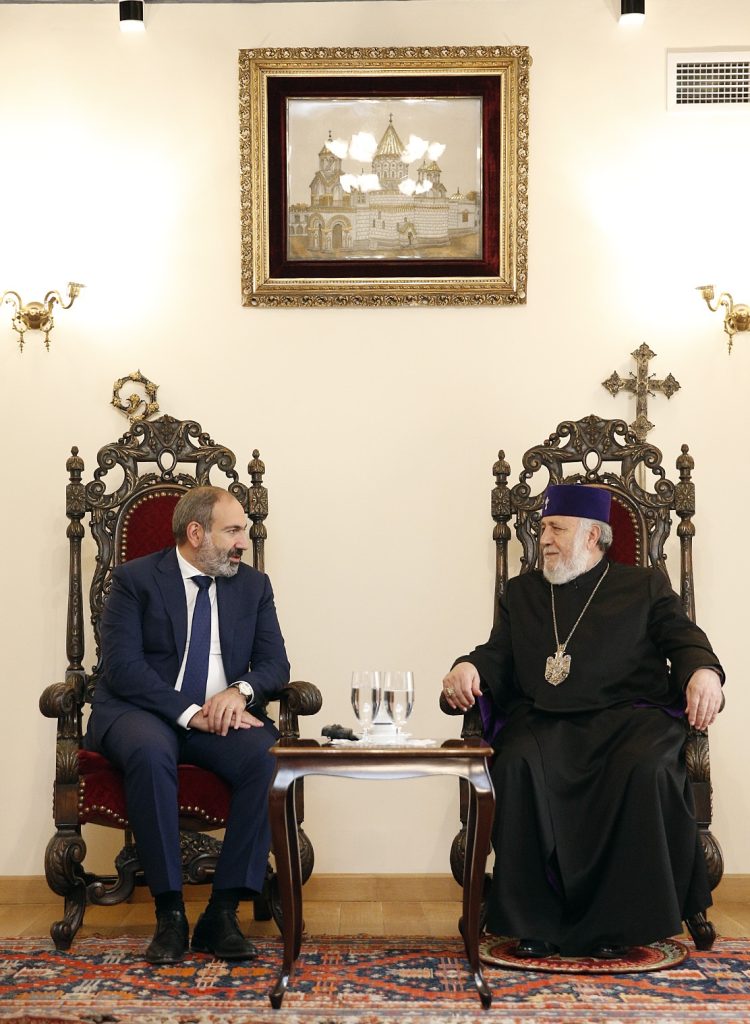
While concerns over the moral conduct of clergy may resonate within the religious community, such matters, when they do not constitute unlawful or unlawfully sanctioned behavior, fall squarely within the Church’s internal jurisdiction. The behavior and observance of celibacy by clergy members are governed by canonical law, and any alleged violations should be examined through the Church’s established procedures rather than through political or state intervention. Government attempts to publicly adjudicate these matters not only risk undermining the autonomy of the Armenian Apostolic Church but also raise serious human rights concerns. Any alleged violation of celibacy is neither an administrative nor a criminal offence under Armenian law and, therefore, falls outside the jurisdiction of the State.
Finally, it is particularly concerning that footage allegedly depicting Archbishop Arshak Khachatryan, Chancellor of the Mother See of Holy Etchmiadzin, in an intimate situation was circulated on Telegram channels in late October 2025, shortly after the Prime Minister made a widely reported public accusation implying an affair between the Archbishop and his uncle’s wife. On 24 October 2025, a Telegram channel named “Armenian WikiLeaks” published several short videos purportedly showing Archbishop Arshak in intimate circumstances with a woman, which were later amplified by ruling‑party‑linked media and social media accounts as “evidence” in the broader political confrontation between the government and the Church. The circulation of these recordings has been described by independent observers as a serious breach of privacy and a troubling example of the weaponization of leaked materials in Armenia’s political conflict, raising concerns about illegal surveillance and the erosion of norms protecting personal life.
It is widely acknowledged that the Armenian Church, like many religious institutions worldwide, faces an increasing need to modernize and undertake institutional reform in response to the social, political, and ethical challenges of the twenty-first century. However, this change should happen organically and not be imposed by the State.
Conclusion
While the conflict between Armenia’s government and the Armenian Apostolic Church continues to evolve, it remains too early to draw definitive conclusions or make reliable forecasts regarding future developments. Regardless of the underlying motives, it is already evident that the government’s actions have further deepened divisions within Armenian society, amplifying political and social polarization. This growing rift has significant implications for the Church, which now faces the risk of a canonical schism, threatening the integrity and cohesion of its internal structures. These developments have profound consequences for the Armenian State, as societal solidarity—so essential for addressing the post-war trauma of the Second Karabakh War and supporting processes of rehabilitation and reconciliation—is increasingly undermined. The combination of internal Church tensions and societal fractures could, if left unaddressed, generate long-term instability, erode trust in institutions, and weaken the capacity of both religious and state structures to foster resilience, social cohesion, and collective recovery.