Religious Freedom and the Courts

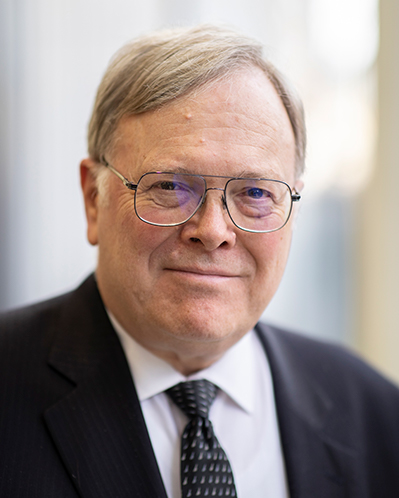
James T. Richardson is Emeritus Foundation Professor of Sociology and Judicial Studies, University of Nevada, Reno.

This post is part of a series on the sociology of religious freedom.

A Sociology of Religious Freedom, coauthored by Olga Breskaya, Giuseppe Giordan, and James T. Richardson, offers in part a sociological perspective on the theoretical underpinnings of the role played by the courts, especially in Western societies, in determining the meaning and implementation of religious freedom. It first explicates how and why this crucial role for the courts has evolved in recent decades and then explores specific trends and landmark cases in major judicial systems in the United States and in Western Europe, focusing on the role courts have played in the protection of religious freedom.

(more…)

Continue Reading Religious Freedom and the Courts

Recent Developments in U.S. Free Exercise Jurisprudence for Native American Religion

Michalyn Steele is Marion G. Romney Professor of Law at the J. Reuben Clark Law School, Brigham Young University. This post is based on a presentation given at the ICLRS 32nd Annual International Law and Religion Symposium, 6 October 2025.

The post is the part of the Religious Freedom and Indigenous Rights series

Several recent unpublished U.S. federal court opinions have responded to claims under the Religious Land Use and Institutionalized Persons Act (RLUIPA) and the U.S. Constitution’s Free Exercise Clause by incarcerated Native American practitioners. The RLUIPA, enacted by Congress in 2000, provides that governments may not impose a substantial burden on the religious exercise of persons confined to institutions unless the government can demonstrate that the burden is in furtherance of a compelling governmental interest and is narrowly tailored to further that interest. Incarcerated practitioners of Native American religion have been able to get access to sweat lodges and other aspects of Native religious practice and to have certain religious practices accommodated under the law.

(more…)

Continue Reading Recent Developments in U.S. Free Exercise Jurisprudence for Native American Religion

Moving Toward Anti-Separation of Religion and State: Frank Ravitch on the Current U.S. Supreme Court

Frank Ravitch (Michigan State University College of Law) discusses America’s shift from moderate separationism to an anti-separationist approach to religion-state relations. According to Ravitch, the victimhood of social conservatives not only drives the Supreme Court’s current majority to an increasingly anti-establishment stance but also results in strong politicization of the Court and its decisions. Ravitch explains how recent First Amendment decisions, including Mahmoud v. Taylor (more because of bias evident in the majority opinion rather than the decision itself), contribute to this trend and predicts that the Court will eventually overturn Smith v. Employment Division and constitutionalize Burwell v. Hobby Lobby. He also touches on an alternative approach to both the current anti-establishment drift and radical separationism.

(more…)

Continue Reading Moving Toward Anti-Separation of Religion and State: Frank Ravitch on the Current U.S. Supreme Court