
Greg Marcar is the senior researcher at the Nathaniel Centre for Bioethics—Te Kupenga (New Zealand).
This post is a part of our series on Magnifica Humanitas.
Introduction: On “Builders of Communion”
On 25 May 2026, Pope Leo XIV released his eagerly anticipated first encyclical, Magnifica Humanitas: On Safeguarding the Human Person in the Time of Artificial Intelligence (MH). One immediately striking aspect of this wide-ranging and rich document is its architectural motif. Pope Leo begins by referencing the biblical narratives of the Tower of Babel (Genesis 11:1–9) and the rebuilding of the walls of Jerusalem (Nehemiah 2–6). In contrast to the “architects of Babel” who represent a mindset of domination, pride, and the dehumanization of others, Pope Leo encourages us to be “builders of communion” (MH, para. 16) who are oriented toward the values of truth, moderation, closeness, and care, thereby cultivating a “mindset of peace” (MH, para. 212).
The Pope acknowledges that the task of standing against Babel and being an architect of peace may seem like an intimidating task—like “the problems are too big and we are too small” (MH, para. 212). Still, he insists, “no one is without responsibility,” and “[w]e all have our own areas for action” (id.). Pope Leo illustrates this charge with words from a Catholic theologian not previously featured in a papal encyclical: J. R. R. Tolkien. In the third book of his Lord of the Rings trilogy, Tolkien’s Gandalf remarks:
It is not our part to master all the tides of the world, but to do what is in us for the succour of those years wherein we are set, uprooting the evil in the fields that we know, so that those who live after may have clean earth to till (MH, para. 213).
These words echo Pope Leo’s teachings earlier in the encyclical on the importance of appreciating the limits and finitude of the human condition, and of “remember[ing] that humanity flourishes not despite limitations, but often through them” (MH, para. 118).
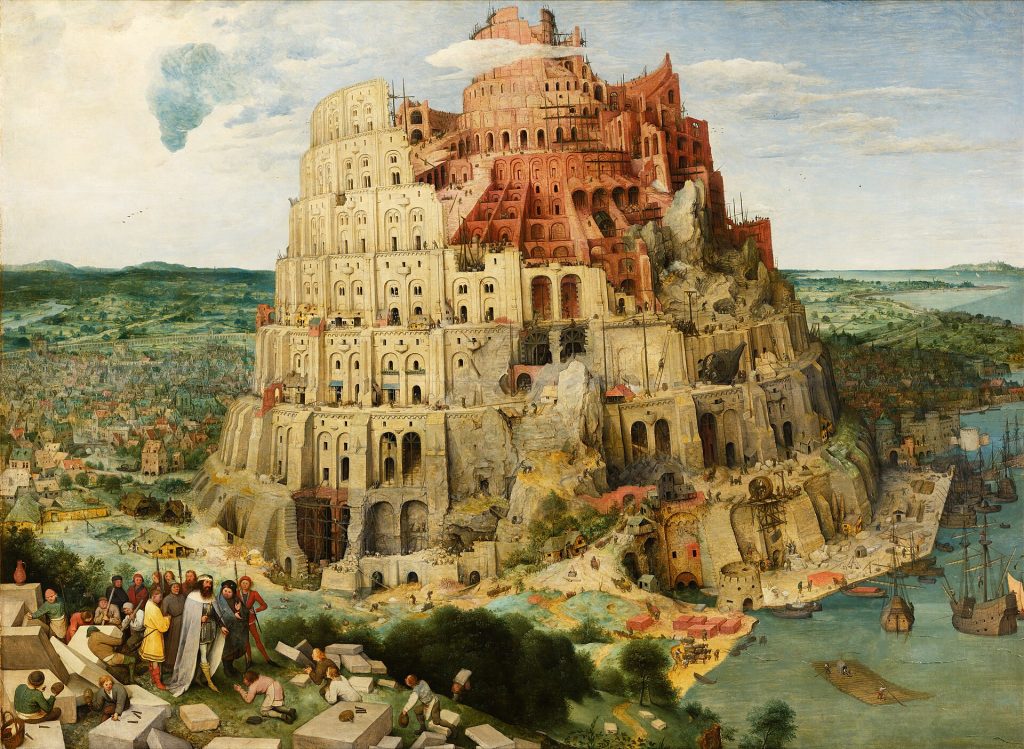
Seen within the overall vision of Magnifica Humanitas, the wisdom embodied in Gandalf’s words serves to connect the task of Christians today with an awareness of their creaturely limitations and situatedness within the natural world and their role as stewards, doing what they can to prepare the way for future generations. In this way, Pope Leo calls us to reject the new Tower of Babel and instead “work together in the presence of God to rebuild the walls of fraternal coexistence” (MH, para. 9).
Peace, Justice, and the Vulnerability of the Displaced
In warning against the dangers of modern technology and its misuses, Magnifica Humanitas points us not only to Catholic theological tradition but also to seminal legal and political documents in recent human history, most notably the Universal Declaration of Human Rights (1948) and the UN Convention Relating to the Status of Refugees (1951). Our treatment of migrants, refugees, and the forcibly displaced, Pope Leo XIV reminds us, stands as a critical “litmus test” for our commitment to—and therefore care for—social justice (MH, para. 81). Justice, he asserts, is among the foundation blocks needed for the construction of peace (MH, para. 215).
The positioning of justice as an antecedent foundation for peace resonates with the theology of peace and its relationship to both love and justice within the Catholic tradition. As Thomas Aquinas writes in his Summa Theologica, peace is an effect or work of charity: just as love brings together and unifies what might otherwise stand apart, so too peace is “the union of the appetite’s inclinations” (ST, pt. II-II, question 29, art. 3). Aquinas associates this concept with Augustine of Hippo, who in his City of God notoriously defines peace as the “tranquillity of order” (bk. XIX, chap. 13). Although peace is the direct work of charity or love (caritas), it remains the role of justice to “remove the obstacles” to peace and thereby prepare the way for the divinely ordered tranquillity brought about by caritas (ST, pt. II-II, question 29, art. 3). In the language of Gandalf quoted above, the work of justice is to “uproot the evil in the fields” so that charity may then till.
Drawing on the teaching of Pope John Paul II and Pope Francis, Pope Leo defines social justice in terms of beginning our moral consideration with those who are most vulnerable—those, such as the poor, the displaced, and victims of violence, who exist on the “existential peripheries” (MH, para. 78). Concern for vulnerability as the raison d’être of social justice draws on the 2013 apostolic exhortation Evangelii Gaudium (EG), in which Pope Francis grounds the calling for all Christians “to care for the vulnerable of the earth” (para. 209) in Jesus’s personal identification with the weakest and most downtrodden members of society (Matthew 25:40).
How are we to understand the displaced as among the most vulnerable human beings, such that their treatment stands as a “litmus test” for a social justice? In her essay on “Structural Injustice and the Two Faces of Vulnerability,” Jade Schiff instructively points toward precarity, on the one hand, and fragility, on the other, as two distinct dimensions of “vulnerability.” A short excursus on how refugees and the displaced epitomize both of these dimensions may prove instructive for further understanding Pope Leo’s claim in Magnifica Humanitas.
Regarding vulnerability as precarity: The condition of refugees and the displaced means they are especially susceptible to physical and psychological harms. Indeed, the 1951 Refugees Convention defines refugee status in terms of having a well-founded fear of persecution such that a person is unable or unwilling to return to their country of origin (Art. 1). To be recognized as a refugee under the 1951 Convention, therefore, is to be recognized as living in a state of insecurity and fear. Following an experience or fear of being excluded or forced out of social, economic, and political State structures that provide support to the non-displaced, an existential sense of vulnerability qua precarity lies at the heart of what it means to be a refugee.[1]
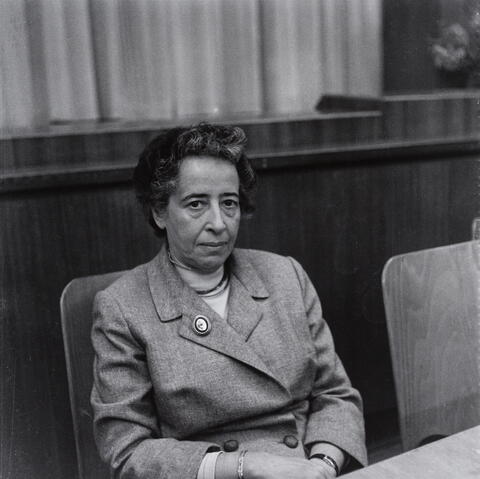
The experiences of refugeehood and displacement also engender particularly acute forms of fragility. When something becomes fragile, it becomes more liable to break or be dissipated. Human beings displaced from their places of domicile—their homes, communities, and places of belonging—not only are rendered physically vulnerable, but their memories, identities, and senses of meaning may also become fragile. Following the events of World War II, Hannah Arendt poignantly describes this sense of psychological-social fragility in her essay “We Refugees”:
We lost our home, which means the familiarity of daily life. We lost our occupation, which means the confidence that we are of some use in this world. We lost our language, which means the naturalness of reactions, the simplicity of gestures, the unaffected expression of feelings.
The vulnerability of displacement is not only the accompanying objective and psychological sense of precarity, but also the way in which being uprooted from familiar contexts makes the refugee’s very identity, and their capacity to navigate the world socially, fragile. In his autobiography, Totally Unofficial, the originator of the term genocide, Raphael Lemkin, recounts his own experience of displacement during World War II in terms similar to Arendt’s but in a way that reveals more fully, perhaps, how displacement can impact peoples’ senses of belonging and their situated identities:
The native landscape is no longer available to the painter, the white birches to the poet, the forms of local injustice to the statesman, even the local diseases to the physician. He becomes like a broken pencil and cannot reunite the lost values of the past with the confused and hostile values of his present state of dispossession.[2]
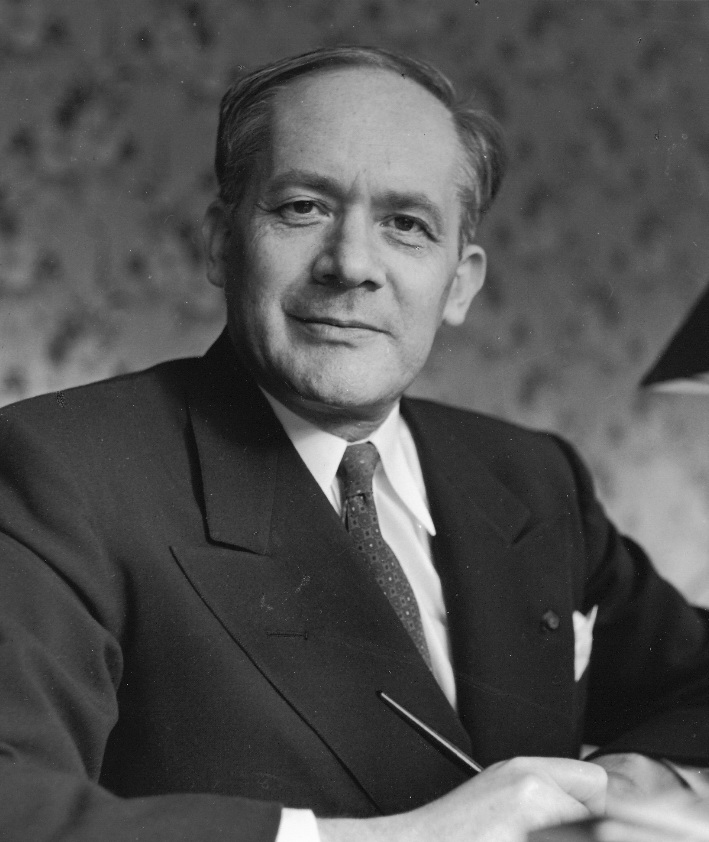
The experience of displacement is akin to feeling like a “broken pencil,” according to Lemkin, in that the change in physical, social, and political environment deprives the refugee of a purposeful sense of place within the world. Considered in conjunction with the inherent precarity experienced by refugees and displaced persons, this helps illuminate Pope Leo’s claim that concern for those in this condition constitutes a “litmus test” for society’s commitment to social justice.
Conclusion
Out of recognition and respect for our finitude as human beings, Magnifica Humanitas calls for human beings to exercise social justice by working within the “fields that we know” to remove obstacles to peace for those who have been uprooted and forced to seek refuge in unfamiliar fields. Finitude and vulnerability represent two sides of the same anthropological coin for Pope Leo XIV, and it is also in these that the true value, worth, and even magnificentia of the human being is to be theologically found.
References:
[1] Notable here is the right of refugees, under Article 14(1) of the Universal Declaration of Human Rights, “to seek and to enjoy” asylum in countries where they will be free from persecution (emphasis added). In other rights documents, and in history, the right to “enjoy” something is commonly linked with the adverbs of doing so “peacefully” or “peaceably.”
[2] RAPHAEL LEMKIN, TOTALLY UNOFFICIAL 267 (Donna-Lee Frieze ed., 2013).