

Erik Longo is full professor of constitutional and public law at the University of Florence.
This post is a part of our series on Magnifica Humanitas.
I write these notes on Pope Leo XIV’s encyclical Magnifica Humanitas (MH), moved by its expressive power and convinced it will become essential reading on the human and social consequences of new digital technologies. The encyclical itself opens with the responsibility we bear, as individuals and a community, in the face of the challenges of our time:
Each generation inherits the task of shaping its own era, of guiding history to become a place where the dignity of every person is safeguarded, justice is promoted and fraternity is made possible. Yet every era also runs the risk of creating an inhumane and more unjust world (MH, para. 1).
Magnifica Humanitas belongs to the long arc of Catholic Social Doctrine that began with Leo XIII’s Rerum Novarum (1891). Where that first encyclical addressed labor and class struggle in an industrializing world, Leo XIV’s reflections aim not to slow social change but to accompany, even anticipate, it. Quoting Laudato Si’, he writes that “never before has humanity had so much power over itself” (MH, para. 4). Now it is up to us to take on the challenges of our time with clarity and responsibility. We must “establish adequate regulatory tools capable of upholding justice and curbing the distorting effects of technological power” (MH, para. 5).
In this blog post, I focus on the encyclical’s Chapter Three, “Technology and Dominance: The Grandeur of Humanity in Light of the Promises of AI.”
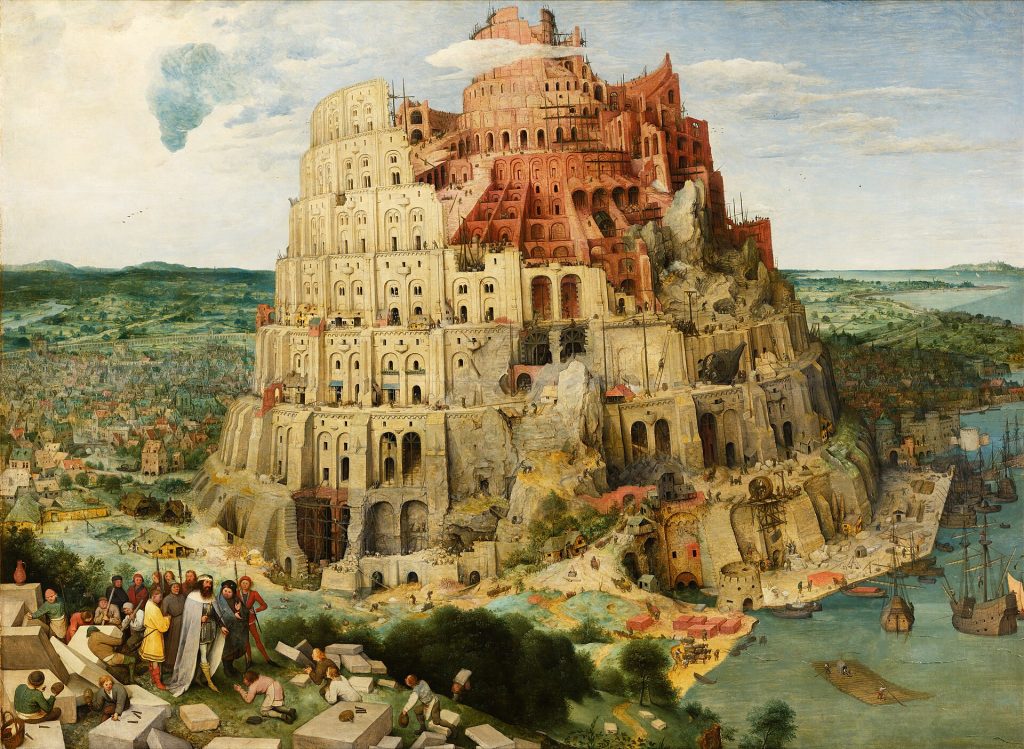
Babel or Jerusalem?
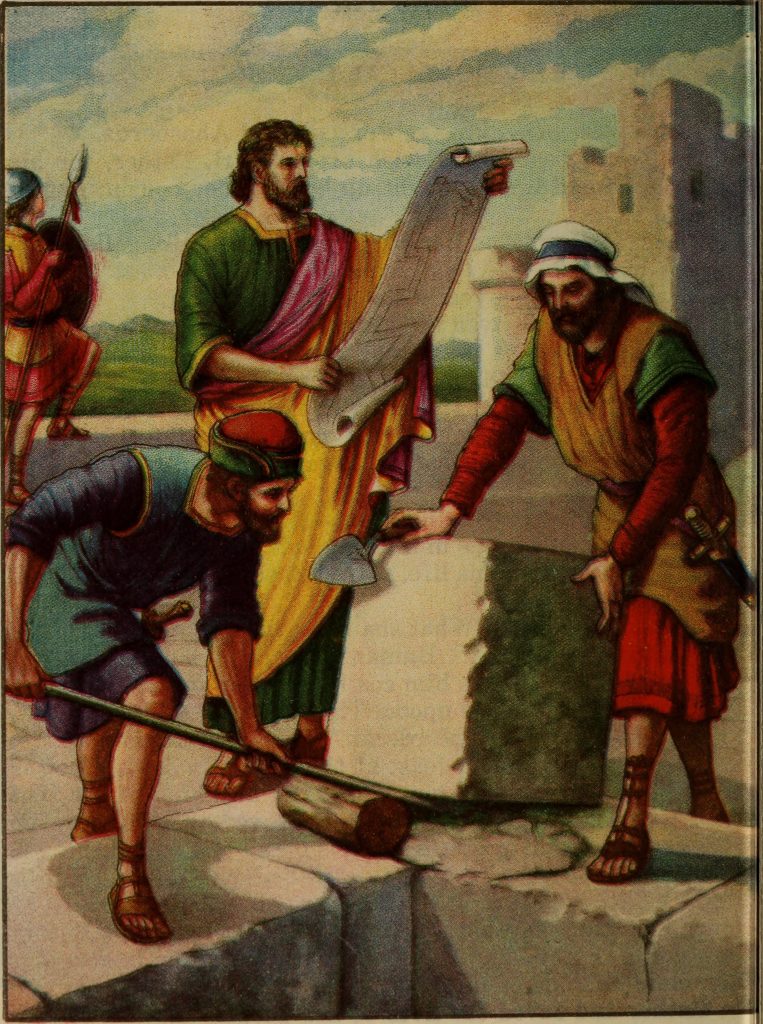
The chapter opens with an image rather than an argument. Every generation, the Pope writes, faces its own “construction sites,” and the question of what we are building admits of only two answers (MH, para. 90). One is Babel: “collective effort follows a plan that dominates and ultimately dehumanizes” (cf. Genesis 11:1–9). The other is the Jerusalem of Nehemiah, rebuilt “piece by piece as a project of shared responsibility” (cf. Nehemiah 2–6). Artificial intelligence, the encyclical insists, is already one of the great construction sites of our era, and believers “must and can choose which projects to work on and in what manner” (MH, para. 90). Recovered explicitly at the chapter’s close in the register of Augustine’s two cities and two loves (MH, paras. 129–30), this Babel-Jerusalem architecture does more work than a simple metaphor. It refuses the two easy postures toward AI (enthusiasm and fear) and substitutes a properly moral question: whose city is being built, and for whom? It is, I think, the theological key running through the whole encyclical.[1]
The Technocratic Paradigm, Revisited
The diagnosis that follows draws directly on Laudato Si’ (LS). What Francis called the “technocratic paradigm”—that is, the tendency to let “the logic of efficiency, control and profit alone shape personal, social and economic decisions” (MH, para. 92)[2]—is, for Leo XIV, the deeper problem beneath any particular AI system. Technology stops being a tool and becomes “the standard by which everything is judged,” dictating “what matters and what can be discarded” (id.). Paragraph 93 is arresting for its citation of Romano Guardini, writing decades before anyone imagined large language models: “Contemporary man has not been trained to use power well.”
The point, as I read it, is that AI, cognitive science, and biotechnology have not created a new problem so much as accelerated an old one about power, which has outpaced the moral and spiritual formation needed to wield it. Paragraph 94 sharpens the warning, invoking Pope Paul VI’s caution that “the most extraordinary scientific progress, the most astounding technical feats and the most amazing economic growth, unless accompanied by authentic moral and social progress, will in the long run go against man.” Humanity risks becoming a victim of its own achievements. Readers of this blog will recognize the resemblance to Pope Francis’s worry, voiced in Fratelli Tutti, that curated communication corrodes rather than builds genuine encounter—a concern Patrick Hornbeck traced through that encyclical. Leo XIV extends that thread directly into the architecture of AI systems.
Concentration Without Accountability
This risk is compounded by economic concentration. Paragraphs 95–96 and 108 note that control over data, computing power, and infrastructure “does not rest with States, but with major economic and technological actors” who “set the conditions for access” and “determine the rules of visibility” (MH, para. 95). Power concentrated in a few hands “tends to become opaque and evade public oversight” (id.), undermining the universal destination of goods (MH, para. 108)—a point scholars echo in arguing that international regulation, not state law alone, is needed to reconcile AI with human development.[3]
The encyclical usefully distinguishes personal from social uses of AI. At the personal level (MH, para. 100), the dangers are ready-made answers, the illusion of objectivity, and simulated communication that erodes rather than builds the desire for genuine relationship. At the social level (MH, paras. 101–08), the dangers shift to environmental cost, decisions delegated to systems incapable of “compassion, mercy, forgiveness” (MH, para. 102), and the amplification of existing economic and political power.
Whose Morality Governs the Machine?
The chapter’s theological and juridical center of gravity is “Responsibility, Transparency and the Governance of AI.” Its central claim: AI systems “reflect and reinforce the stereotypes or ideological bias of their designers and developers” (MH, para. 102) and are never neutral instruments; hence “we cannot consider AI to be morally neutral” (MH, para. 104), since every technical tool embodies choices about what it measures, ignores, and optimizes. Andrea Pin has recently argued that AI’s capacity to profile and infer inner states exposes a long-standing legal blind spot around freedom of thought and conscience.[4]
Crucially, the encyclical refuses to simply “moralize” the machine. Aligning AI with stated human values is not enough “without also having the courage to insist on a further condition,” since, unchecked, “those who control AI will impose their own moral vision, which will become the invisible infrastructure of these systems” (MH, para. 107). A more “moral” AI, the text warns, “is not enough if that morality is determined by a few” (id.).
Paragraphs 109 through 111 supply the constructive proposal. The common good “means exposing this new form of epistemic, economic and political asymmetry and naming the new monopolies of AI”; subsidiarity means protecting communities’ ability “to make choices and corrections” rather than mere after-the-fact oversight; solidarity means recognizing the “hidden, often exploited workers” who sustain algorithmic systems (MH, para. 109). Paragraph 110 borrows military language to invert it: to “disarm” AI means freeing it from a logic of competition—geopolitical, economic, and cognitive—without rejecting technology but “preventing it from dominating humanity.” Paragraph 111 turns to developers, in a register of vocation rather than regulation: innovation can be “human participation in the divine act of creation,” and “every design choice reflects a vision of humanity,” one to be exercised with transparency, accountability, and attention to cultivating a “genuine good.”[5]
The Measure of Civilization
What follows, in paragraphs 112–14, names what must not be lost. The technocratic paradigm, amplified by AI, “threatens to normalize an anti-human vision” in which fullness of life means “having more, reducing weakness, eliminating uncertainty and exerting total control” (MH, para. 112). But “elevating any single dimension of human existence to an absolute is always a mistake” (MH, para. 113); human beings are made for relationship and communion, not optimization.
The chapter’s closing measure is therefore not technological but moral: “[t]he quality of a civilization is measured not by the power of its means, but by the care it is able to offer” (MH, para. 114). Read alongside the Babel-Jerusalem and two-cities framing that bookend it, Chapter Three reads less like a technology-policy document than a mirror: “the construction of Babel or the rebuilding of Jerusalem begins within each one of us” (MH, para. 130).
This line of thought has roots in the last years of Pope Francis, when the Dicastery for the Doctrine of the Faith’s declaration Dignitas Infinita gave the magisterium its first, brief treatment of “digital violence” among the grave threats to human dignity—two paragraphs that Paolo Carozza, writing on this blog, called “a suggestive signpost pointing to fruitful fields of reflection.” Magnifica Humanitas is the fuller expedition down that path. That signpost has become a chapter.
Few recent documents engage AI governance with this combination of cultural depth and institutional specificity, which is why Magnifica Humanitas deserves to be treated as a foundational reference for anyone thinking seriously about the ethics and governance of artificial intelligence. The encyclical offers legal scholars studying technology, regulation, and rights many points for reflection, including self-criticism—more than a short blog post can explore. Whether we end up building Babel or rebuilding Jerusalem, as Magnifica Humanitas insists, is a choice each of us keeps making—one design decision, one line of code at a time.
References:
[1] Maurice N. Emelu, Formation at the Frontier: Pope Leo XIV Discourse on AI and Digital Media, 3 May 2026, JOURNAL OF MEDIA AND RELIGION.
[2] Pasquale Annicchino, The “Technocratic Paradigm” in the Context of “Throwaway Culture”: Catholic Contributions to the Debate on Artificial Intelligence, 23(3) THE REVIEW OF FAITH & INTERNATIONAL AFFAIRS 112 (2025).
[3] Andrea Simoncini & Mario Biggeri, Agency and the Role of International Regulation: Reconciling AI Technologies and Human Development, 26(3) JOURNAL OF HUMAN DEVELOPMENT AND CAPABILITIES 449 (2025).
[4] Andrea Pin, Freedom of Thought, Conscience, and AI, JOURNAL OF LAW AND RELIGION (2026).
[5] Enrico Beltramini, Theology and the Economics of AI: Reading Acemoğlu Through Catholic Social Thought, 129(3) THEOLOGY 168 (2026).