
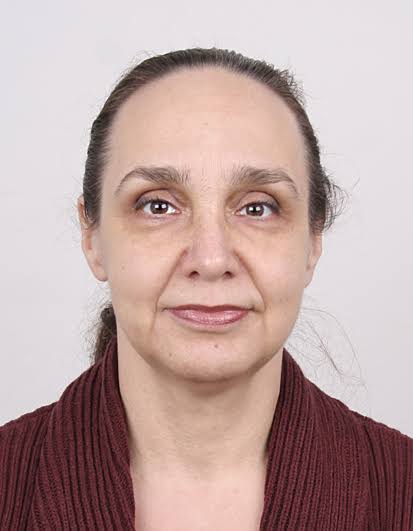
Daniela Kalkandjieva is a researcher at Sofia University St Kliment Ohridski.
Since its establishment in 1878, the modern Bulgarian state has promulgated four constitutions. All of them address religion but in different ways. Introduced in 1879, the first Bulgarian Constitution distinguished majority and minority religions. In the aftermath of World War II, a new communist regime produced two fundamental laws, in 1947 and 1971, to facilitate its ultimate aim—the creation of an entirely atheist society. National legislation underwent further transformations when totalitarian rule ended in 1989. Created to meet the profound political, ideological, and socioeconomic changes in Bulgarian society and its drive for democratization, the 1991 Constitution has generated the next shift in state policy on religious matters. Based on these historical foundations, this post outlines the evolution of Bulgaria’s constitutional approaches to religion in different (geo)political and societal contexts.
The Majority Religion Across the Bulgarian Constitutions
Bulgaria’s 1879 Constitution defined Eastern Orthodoxy, the local majority religion, as the country’s “dominant religion” (Article 37) and prescribed the ruler’s affiliation with that faith (Article 38). In this respect, the young Bulgarian state followed the pattern of established state religion adopted by the Orthodox kingdoms of Greece, Serbia, and Romania upon their liberation from Ottoman rule. At the same time, the 1879 Constitution established a peculiar relationship between the nation-state and the Holy Synod of the Bulgarian Orthodox Church by obliging the former to comply with the decisions of the latter as the supreme ecclesiastical authority (Article 39).
Meanwhile, the rights of the local Muslim community, the biggest faith minority in the country, were protected by international treaties and by bilateral agreements concluded first with the Ottoman Empire and then with Kemalist Turkey. Regarding religious minorities, the 1879 Constitution followed an approach resembling the Ottoman millet system used in Bulgarian lands for about five centuries. More specifically, minorities had the right of autonomous self-government and freedom to perform rites that did not violate national legislation (Article 40).The Bulgarian Minister of Foreign Affairs assumed responsibility for religious matters, though the 1879 Constitution contained only a vague reference to his administrative supervision over faith minorities (Article 42).
At the end of World War II, the Bulgarian Communist Party, with Soviet assistance, seized power and ousted the old constitutional model. The 1947 Constitution disestablished Eastern Orthodoxy as the country’s dominant religion. Nevertheless, the faith was explicitly mentioned in the communist Law on Religious Cults of 1949, which defined the Bulgarian Orthodox Church as an institution representing the “traditional religion”—that is, an entity closely linked with the nation’s history (Article 3). This legal “branding” was part of a long-term strategy. By prioritizing the national over the spiritual in the image of the Bulgarian Orthodox Church, the 1949 law strove not to alienate Orthodox believers from the new regime. In addition, the emphasis on tradition helped facilitate a transformation of the believers’ devotion to Eastern Orthodoxy into hostility against the Catholic and Protestant churches of the capitalist West.
The focus of tradition reemerged in the 1991 Constitution. It declares Eastern Orthodoxy as the country’s “traditional religion” (Article 13) but in a democratic context. The worries that this provision would disadvantage religious minorities were calmed by the Constitutional Court in 1998. In Judgment No.2/1998, the Court explains that the phrase “traditional religion” signifies nothing more than a tribute to the cultural and historical role of Eastern Orthodoxy and its significance for the national holiday system (e.g., Easter, Christmas, and Sundays).
Freedom of Religion Across the Bulgarian Constitutions
The 1879 Constitution did not comment on the religious liberties of Orthodox Christians but explicitly guaranteed such freedoms to believers belonging to faith minorities (Article 40). In parallel, it promulgated the primacy of national legislation over religious convictions and did not accept the latter as an excuse for disobedience to law (Article 41).
After World War II, however, the communist regime created a paradox. Despite their ambition to wipe out religion entirely, the new rulers did not establish militant atheism as an official ideology in the 1947 Constitution but instead proclaimed freedom of thought and belief, as well as freedom to perform religious rituals (Article 78.1). The 1947 Constitution also prohibited the misuse of religion and church for political ends and the establishment of political parties on religious grounds (Article 78.2). In real life, however, the performance of religious rites was systematically obstructed, while their participants were harassed and persecuted. The 1971 Constitution added new elements reflecting the atheist nature of the Bulgarian communist state. It introduced antireligious propaganda as a special right of Bulgarian citizens (Article 53.1) and, similar to the 1879 Constitution, rejected religious convictions as a sanctioned basis for declining to perform constitutionally established duties (Article 53.5).
Furthermore, the communist-era constitutions restricted the presence of religion in citizens’ private lives. More specifically, the 1947 Constitution blocked any presence of religion in school through the imposition of secular education. The 1971 Constitution then took a step further in candidly defining Marxism-Leninism as the foundation of education (Article 45.3). In parallel, family affairs were also disentangled from religion. While the 1947 Constitution buried the pre-communist millet-based family model and declared that only civil marriage had legal force, the 1971 Constitution obliged parents to attend to the communist upbringing of their children (Art. 38.3).
Ultimately, the fall of communism required a new approach to religion. An amendment to the 1971 Constitution removed restrictions on freedom of religion (Article 53.1), but such measures were insufficient. Thus, the 1991 Constitution offered a completely new framework of human rights and religious liberties. It bans religion-based privileges and restrictions (Article 6.2). More importantly, it abandons the narrow understanding of religious freedom as mere toleration of religious rites and guarantees not only freedom of conscience and belief but also the “choice of religion and of religious or atheistic views” (Article 37.1).
In this regard, it is necessary to explain that the term atheist, despite its use in the 1991 Constitution, has lost its popularity in Bulgarian society due to its communist connotation. Instead, politicians, journalists, researchers, and people generally prefer words like irreligious or nonbelievers. Meanwhile, similar to previous constitutions, the 1991 Constitution forbids the use of religious institutions and beliefs for political ends (Article 13.4).
Religion-State Relations in the 1991 Constitution
The 1947 Constitution broke the previous close partnership between the state and the Bulgarian Orthodox Church and introduced the principle of church-state separation. For its part, the 1991 Constitution sought to break with the legacy of the “godless” communist regime, restore continuity with the pre-atheist past, and secure the democratization of all spheres of public life, including the religious one. In relation to state-religion relations, this approach produced an amalgam of innovations and modified old constitutional formulas. In particular, the 1991 Constitution preserves the principle of separation but replaces the term church with religious institutions (Article 13.2). Such an alteration suggests a more inclusive and pluralist approach that is open to all religious institutions in the country. Besides, in the new political and social context, the concept of separation is no longer utilized as a means of separating society from religion and marginalizing the latter.
From a broader perspective, the 1991 Constitution has laid the ground for selective secularism and exhibits greater flexibility compared to the extreme secularism of previous communist constitutions. Although the current constitution has preserved the legal force of civil marriage, its operation in the present political and ideological context does not impose restrictions on religious weddings.
The 1991 Constitution also reflects changes in relation to the educational sphere. It does not define education as secular. Instead, the secularist premise of education is implemented through the Law on Pre-School and School Education, which allows optional classes for the study of religion in public schools. In this regard, the Bulgarian state’s latest agreements with the Holy Synod of the Bulgarian Orthodox Church and the Grand Mufti’s Office have secured their supervision over the content of the relevant textbooks, followed by the approval of the Ministry of Science and Education. In addition, only graduates of the faculties of Orthodox theology, as well as those of the Sofia Higher Institute for Islamic Studies, are eligible to teach such classes. In practice, however, the curricula of the facultative study of religion in public schools is dominated by Eastern Orthodox concepts; the study of Islam follows a similar pattern relative to, and limited to, regions with concentrated Muslim populations.
From the Cultural Notion of “Traditional Religion” to a Multi-Tiered Religious Policy
Although the religious provisions of the 1991 Constitution have never been amended, their interpretation has evolved over time. The most substantial change occurred in 2002, when the Religious Denominations Act was adopted. While granting ex lege registration to the patriarchal Bulgarian Orthodox Church (Article 10.2), this act required other religious institutions to complete court registration to obtain legal entity status (Art. 15.1). In 2025, another amendment guaranteed the Orthodox Church’s monopoly on the qualifier Orthodox (Article 15.3). As a result, other registered religious institutions with the same adjective in their names had to change their names in order to preserve their status as legal entities. The Constitutional Court has also demonstrated a special deference to the Bulgarian Orthodox Church—for example, in consulting the Holy Synod on cases involving gender issues.
Furthermore, in addition to legal texts that clearly distinguish the Bulgarian Orthodox Church from other religious institutions in the country, the Religious Denominations Act introduced new provisions that hint at the establishment of a multi-tier state approach to local religions. According to the act’s 2018 amendment, the leadership of faith communities whose membership exceeds 1% of the country’s population receive a special state subsidy, estimated per capita. However, there is no clarity on the subsidy-estimation formula for smaller religious communities. Besides, such subsidies are distributed mostly to historical religious institutions (the Orthodox Church, the Muslim community, the Catholic and old Protestant churches etc.) and there is no information on the subsidy structure for newly registered religious communities, which total approximately 200.
The legal reasoning behind the special state subsidies and tax benefits for religions is not very clear. In practice, the Holy Synod of the Bulgarian Orthodox Church and the Grand Mufti’s Office benefit the most from this system because, in addition to the state subsidies, the leaderships of the Bulgarian Orthodox Church and the Muslim community receive significant financial means from their restituted economic assets (lands, urban residential and office buildings, etc.), which are not taxed and publicly reported. Other religious groups, however, do not have such additional financial means at their disposal.
According to the 2011 Census, 4,374,135 Bulgarian citizens (59.4% of the population) identified themselves as Orthodox and 577,139 (7.8%) as Muslims. Meanwhile, the 2021 census registered 4,091,780 Orthodox citizens (62.8%) and 638,708 Muslims (9.8%). The membership of those respective faiths is presumed to equate to the number of citizens who decided to disclose their religious identity as Orthodox or Muslim in the census questionnaire. Yet the system has inconsistencies and other issues. The national census data is collected every 10 years, while the subsidy amount per capita is determined annually by the National Budget Law. For example, in 2019, the amount per capita was about 5 EUR, whilein 2025 it was 10 EUR. Such fluctuations are not explained. Finally, neither the law nor the state takes into account the incomes of the Bulgarian Orthodox Church and the Grand Mufti’s Office from arable lands, forests, and other economic enterprises that were nationalized by the communist regime and then, after the collapse of this regime, returned to their religious owners by a post-Communist government.
Conclusion
Compared with Bulgaria’s communist constitutions, the 1991 Constitution reveals a series of innovations, most of which were inspired by the country’s post–Cold War democratization. Yet that constitution did not break entirely with the institutional secularism of its communist predecessors. As a matter of legislation, the post-communist state continues to define the Bulgarian Orthodox Church as a traditional (but not established or official) religion. In a way, this definition also reflects a return to the state’s pre-communist legacy and an emphasis on institutional religion rather than on religious freedoms. Furthermore, the 2018 Religious Denominations Act amendment, providing public funding to certain religions, reveals a tendency toward controlled pluralism and the development of a multi-tiered approach to local religious institutions; this approach is especially beneficial for the leadership of the country’s large religious communities in the country—the Holy Synod of Bulgarian Orthodox Church and the Grand Mufti’s Office. This approach is especially beneficial for the leadership of the country’s large religious communities in the country—the Holy Synod of Bulgarian Orthodox Church and the Grand Mufti’s Office—but not always fair and consistent with respect to minority religions.