
Religious Freedom and Security as Mutually Reinforcing Objectives: Reflections on the New OSCE/ODIHR Policy Guidance

A Conversation, organized by Dmytro Vovk,
Director of the Centre for the Rule of Law and Religion Studies, Yaroslav Mudryi National Law University in Kharkiv, Ukraine, and co-editor of Talk About: Law and Religion.

On September 19, 2019 the Organization for Security and Co-operation in Europe’s Office for Democratic Institutions and Human Rights (OSCE/ODIHR) released its Freedom of Religion or Belief Policy Guidance. Based on the OSCE comprehensive concept of security, the policy guidance provides guiding principles and a number of recommendations to address a number of notable issues at the intersection of freedom of religion or belief and security in the OSCE region. Its primary audience is policymakers concerned with security and with religion, but religious communities, civil society organizations, and media will also find the analysis and practical guidance useful. (more…)
Continue Reading Religious Freedom and Security as Mutually Reinforcing Objectives: Reflections on the New OSCE/ODIHR Policy Guidance

The Names of Religious Groups and Security-Related Concerns

Dmytro Vovk is Director of the Centre for the Rule of Law and Religion Studies, Yaroslav Mudryi National Law University in Kharkiv, Ukraine, and co-editor of Talk About: Law and Religion.

Among other things the OSCE/ODIHR Freedom of Religion or Belief and Security Policy Guidance focuses on finding a fair balance between the autonomy of religious groups and the requirements of public safety and national security. The guidance document calls these two values “complementary, interdependent and mutually reinforcing objectives that can and must be advanced together.” The autonomy of a religious groups includes the right to self-name. It presupposes that religions may, at their discretion, choose any name for themselves based on their dogmas, canons, and principles. This name unites believers and expresses their shared religious identification. The name may include the institutional form of a religious group (church, movement, society, etc.), the name of the deity, a leader, sacred places or texts, the mission of the group, and so on. (more…)

Continue Reading The Names of Religious Groups and Security-Related Concerns

Juan Martin Vives (1980-2019)

With deep sadness we announce the sudden and untimely passing of our young colleague Juan Martin Vives, devoted husband of Gisela and father of Jana and Mark. Juan Martin was a member of the 2018 Inaugural Class of the International Law and Religion Studies’ Young Scholars Fellowship on Religion and the Rule of Law.

Only 39 years old at the time of his death on the night of October 1st, 2019, Juan Martin was an energetic legal scholar, academic leader, and speaker, a vibrant international voice on matters related to Law and Religion, Religious Freedom, and relations between Church and State.

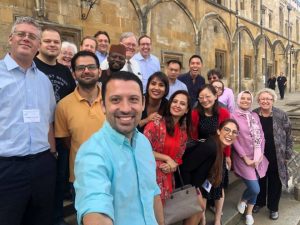
Juan Martin’s group selfie, Oxford 2018 (more…)

Continue Reading Juan Martin Vives (1980-2019)