Another Case of Déjà Vu: The Sacrifice of Conscience to Monsters

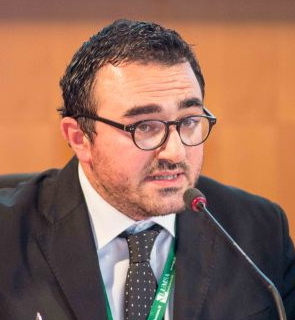
Dr. Neville Rochow KC is an Australian barrister, associate professor (adjunct) at the University of Adelaide Law School, and a member of Elliot Johnston Chambers in Adelaide. The post is a part the Sacralization of AI series.

Introduction

The possession of a conscience is a fulcrum of the human rights project. The defining characteristic of humankind is the possession of conscience. Variously described, and difficult to define [1], conscience is essential to our capacity to make moral judgments. As Douglas Langston described “conscience,” it is “as a judging and punishing faculty” or an “internal judge” [2]. Summarizing the thought of Immanuel Kant and Sigmund Freud on the subject, conscience can be regarded as “moral reasoning, a personal monitor, emotive reasoning” [3]. Morality is not and cannot be mechanical [4]. Despite this, we seem willing to submit to totalitarian regimes that do not rule according to conscience and that profess no moral values: the corporation, and the algorithm.

(more…)

Continue Reading Another Case of Déjà Vu: The Sacrifice of Conscience to Monsters

AI and Commodification of Religion

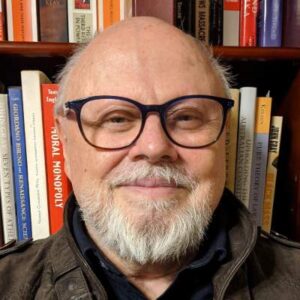
Johan Eddebo is a researcher at the Centre for Multidisciplinary Research on Religion and Society(CRS), Uppsala University. The post is a part the Sacralization of AI series.

“In the beginning was the word. Language is the operating system of human culture. From language emerges myth and law, gods and money, art and science, friendships and nations and computer code. A.I.’s new mastery of language means it can now hack and manipulate the operating system of civilization. By gaining mastery of language, A.I. is seizing the master key to civilization, from bank vaults to holy sepulchers.

What would it mean for humans to live in a world where a large percentage of stories, melodies, images, laws, policies and tools are shaped by nonhuman intelligence, which knows how to exploit with superhuman efficiency the weaknesses, biases and addictions of the human mind — while knowing how to form intimate relationships with human beings? In games like chess, no human can hope to beat a computer. What happens when the same thing occurs in art, politics or religion?”

—Yuval Harari, Tristan Harris, and Aza Raskin [1]

The words of Harari et al. above are symptomatic of contemporary technological culture’s preoccupation with spectacular AI—with the awesome and almost redemptive promises attributed to this really not-so-novel form of technology through what’s perhaps best described as a highly effective viral marketing endeavour.

(more…)

Continue Reading AI and Commodification of Religion

Sacralization of AI

Yulia Razmetaeva is a visiting researcher at Uppsala University (Sweden) and Head of the Center for Law, Ethics and Digital Technologies at Yaroslav Mudryi National Law University (Ukraine). The post is a part the Sacralization of AI series.

We created AI. Now, AI is re-creating us. Smart algorithms have already changed much in our societies and lives. Artificial intelligence has changed our daily habits, decision-making processes, work environments, transportation management, natural disaster response and recovery, peacetime elections, and the defense of nations in wartime. There will be even more changes when we replace even more human effort with that of machines. There’s no way we can do without algorithms—they are indispensable, and we now rely on them for each and every step we take. As AI seems to have penetrated every tier of our lives, it is now part of the atmosphere, along with oxygen, and is essentially perceived as a deity or holy spirit that is omnipresent, omniscient, and omnipotent.

(more…)

Continue Reading Sacralization of AI