
Torah, War, Politics, and the Supreme Court: The 2024 Military Service of Ultra-Orthodox Yeshiva Students Bill
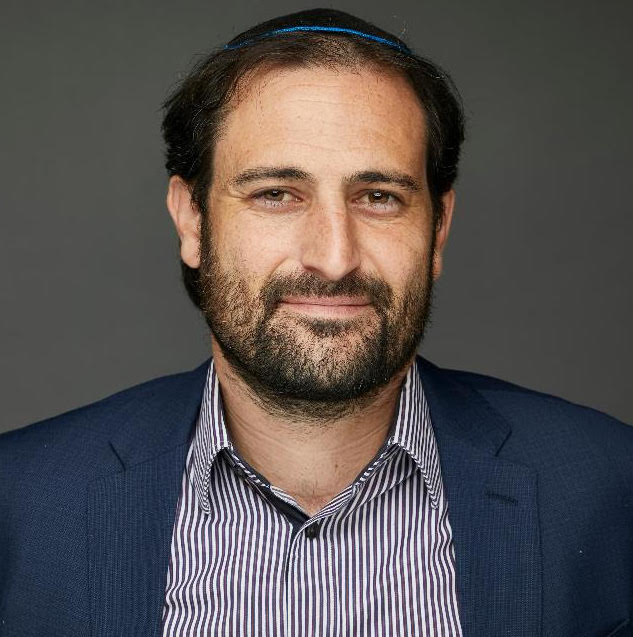
Moshe Jaffe is a constitutional law adjunct professor at the Academic Center of Law and Science in Israel and an adjunct professor at Cardozo School of Law.

Introduction

The tragic events of 7 October and the subsequent war in Gaza have reignited longstanding tension in Israel regarding the drafting of Ultra-Orthodox yeshiva students. This issue has been impacted as well by recent rulings of the Israeli Supreme Court, which have brought the matter back into public debate. This post aims to simplify this extremely complex issue and guide the reader through developments leading to the recent bill currently being considered by the Knesset. Given the brevity of this post, its focus is on recent developments and specifically on the 2024 bill rather than a comprehensive historical review.

(more…)

Continue ReadingTorah, War, Politics, and the Supreme Court: The 2024 Military Service of Ultra-Orthodox Yeshiva Students Bill

Conscientious Objection to Military Service in Türkiye

Mine Yildirim is head of the Norwegian Helsinki Committee’s Freedom of Belief Initiative in Turkey.

Nearly two decades after the 2006 Ülke v. Turkey[1] judgment of the European Court of Human Right (ECtHR), and findings of the United Nations (UN) bodies such as the Human Rights Committee (HRC or the Committee) and the UN Working Group on Arbitrary Detention, Türkiye still has not recognized the right to conscientious objection to military service. Punitive measures impacting freedom of thought, conscience, and religion and other fundamental rights for conscientious objectors continue to be integral to national policy. The robust recognition of the right to conscientious objection to military service right under international human rights law, within the scope of the right to freedom of thought, conscience, and religion, has provided the basis for the legal struggle to put an end to human rights violations that conscientious objectors have experienced in Türkiye.

(more…)

Continue ReadingConscientious Objection to Military Service in Türkiye

Freedom of Religion and Belief in Turkey: Recent Challenges and Recommendations in the Context of European Integration

Dr. Özgür Heval Çɪnar is an associate professor in law at the University of Greenwich, School of Law and Criminology

Introduction

Freedom of thought, conscience, and religion, from which stems the tenets of pluralism, tolerance, and open-mindedness, is one of the most basic freedoms of a democratic society. Several international human rights documents safeguard this freedom (e.g. Art. 9 of the European Convention on Human Rights, ECHR). Turkey is a signatory to these conventions, but in practice, it has rarely lived up to its obligations.

The Justice and Development Party (Adalet ve Kalkınma Partisi – AKP) came to power in Turkey in 2002. The AKP pledged to introduce freedoms and, during 19 years in government, has made some significant legal changes in line with the political criteria of the European Union (EU); this was because Turkey started the accession negotiations for full membership in 2005. However, it has failed to address many restrictions related to the freedom of thought, conscience, and religion. As a result of this failure, Turkey was named in the 2021 report of the United States Commission on International Religious Freedom as one of the countries where the most serious contraventions of religious freedoms take place. In this article efforts will be made to understand the situation as regards the right to freedom of religion and belief in Turkey, concentrating on the most topical issues.

(more…)

Continue ReadingFreedom of Religion and Belief in Turkey: Recent Challenges and Recommendations in the Context of European Integration