

Martina Bär is professor of fundamental theology at the University of Graz (Austria).
This post is a part of our series on Magnifica Humanitas.
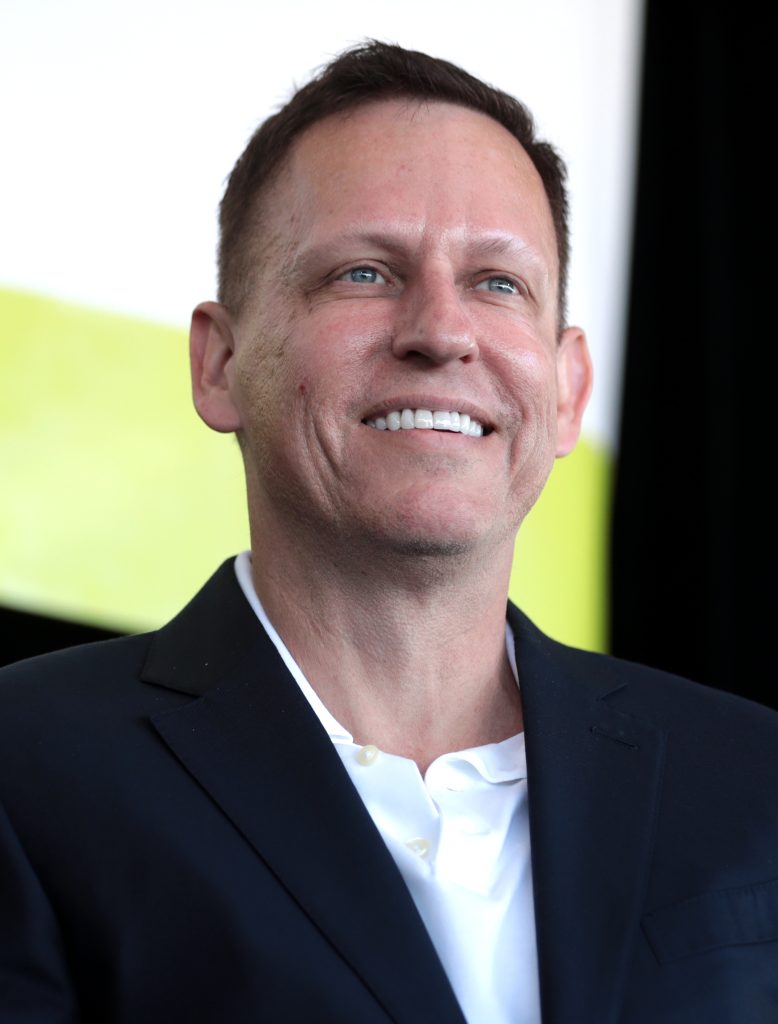
“The Pope is working for the Chinese Communists.” With this provocative statement, US tech billionaire Peter Thiel made international headlines just weeks after Pope Leo XIV published his first encyclical. According to Thiel, the West risks losing the race for artificial intelligence (AI) to China—not least because moral authorities such as the Vatican are slowing technological progress. While authoritarian states continue to develop AI without restraint, democratic societies, he argues, place unnecessary constraints on themselves by worrying about ethics. Behind this criticism lies a worldview that regards technological superiority as the decisive factor in global geopolitical power.
For precisely this reason, Leo XIV’s first major teaching document, the encyclical Magnifica Humanitas (MH), is far more than an internal Church document. It intervenes directly in one of the most important political and social debates of our time. At stake is the question of who or what will shape our digital future: global technology corporations, geopolitical power struggles, or societies that democratically establish ethical principles for the development and use of AI. Yet Leo XIV does not ask whether artificial intelligence is good or bad. Instead, he poses a far more fundamental question:What kind of human beings do we want to become in the age of AI? And what ethical standards should follow from our understanding of the human person?
A Programmatic Vision for His Pontificate
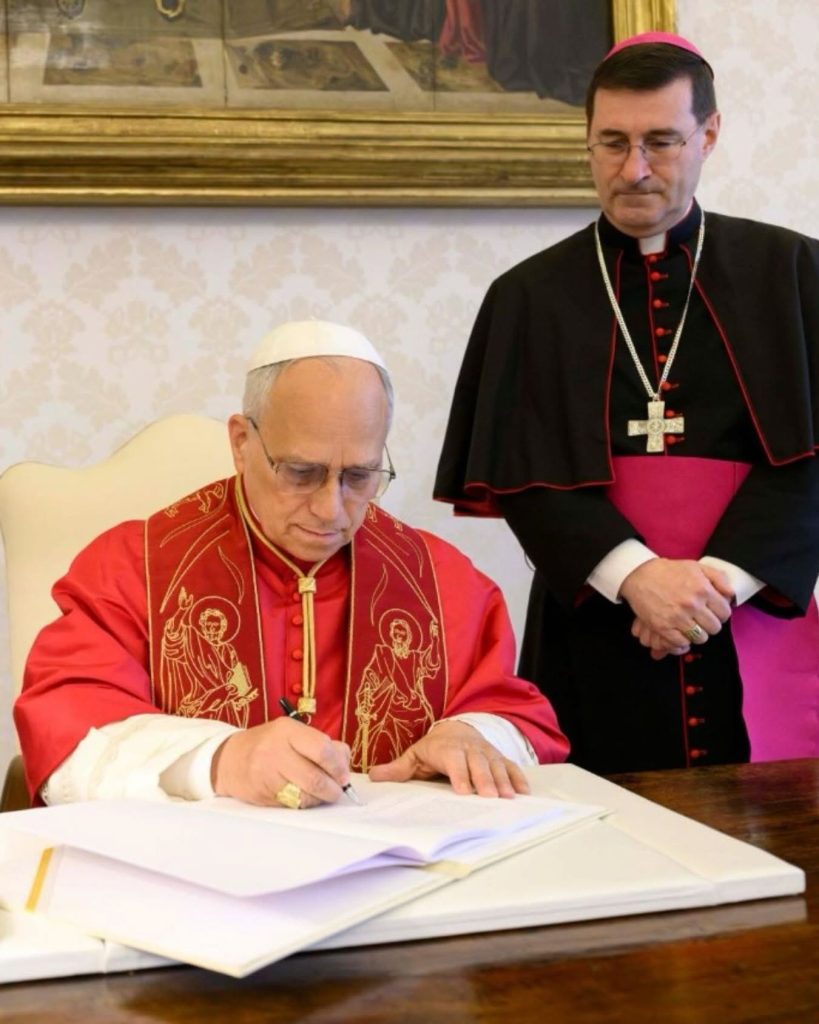
Magnifica Humanitas, published on 15 May 2026, addresses artificial intelligence and its consequences for humanity and society. It is, above all, a document about human beings and for human beings. Pope Leo argues that we stand at a cultural crossroads reaching far beyond technological innovation itself. The decisive question is whether the human family will preserve its humanity amid the rapid pace of technological change. Will we delegate responsibility to algorithms, or will we continue to assume responsibility ourselves? Will truth, human relationships, and the common good remain our guiding principles—or will efficiency, control, and profit take precedence?
The publication date of the encyclical was itself highly symbolic. It appeared on the anniversary of Rerum Novarum, Pope Leo XIII’s landmark encyclical of 1891, which laid the foundation for Catholic social teaching in response to the degrading living and working conditions created by the Industrial Revolution. Faced with the profound social consequences of technological progress, Leo XIII believed that the Church had a moral responsibility to speak out in the name of human dignity. Today’s Pope Leo consciously places himself within that same tradition. Once again, humanity finds itself at a historical crossroads and must decide which values and norms will shape its future.
The Human Person—Not Technology—at the Center
Much of today’s debate about AI revolves around performance, innovation, and economic competition. Leo XIV shifts the perspective entirely. His central question is not, What can AI do? Rather, it is, What does AI do to our understanding of what it means to be human? This is the anthropological core of the encyclical. Technology is never neutral. It changes the way we work, communicate, make decisions, and perceive reality. For Pope Leo, therefore, simply discussing algorithms is not enough. The real issue is the kind of society we create through these technologies, since they inevitably shape our thinking and actions. The encyclical’s originality lies precisely in its interpretation of AI not merely as a technological revolution but as a profound cultural transformation—one that human beings themselves have the power to shape.
To illustrate this moment of transition, Leo XIV turns to two biblical narratives (MH, paras. 7–14). The first is the Tower of Babel, where humanity believes that technological achievement can overcome every limit. The result is not unity but chaos. In contrast, the Pope points to the rebuilding of Jerusalem after the Babylonian exile. There the future emerges not through ambition or domination but through shared responsibility. These two biblical images symbolize the two possible paths before us today: artificial intelligence can either become an instrument of unprecedented concentrations of power, or it can serve the common good if human beings use it responsibly. The Pope emphasizes that AI itself will not determine which path we take. That decision remains ours. We are not powerless in the face of technological change.
Not Anti-technology
Remarkably, Leo XIV is anything but hostile to technology. He explicitly acknowledges the enormous potential of AI in medicine, science, education, and many other fields. His criticism is directed not against innovation itself but against a technological development driven exclusively by economic interests, particularly those of a small number of powerful tech billionaires. In doing so, he builds on Pope Francis’s critique of what he called the technocratic paradigm: the belief that every social problem can ultimately be solved through technology (MH, paras. 92–96). Not everything that is technologically possible automatically contributes to genuine human flourishing.
Leo XIV is especially critical of transhumanist visions emerging from parts of Silicon Valley (MH, paras. 115–17). Some envision a future in which human intelligence is entirely replaced or even surpassed by machines, while others openly dream of overcoming the biological limitations of the human condition. The Pope firmly rejects this vision. Machines may process data, but they do not experience reality. They know neither joy nor suffering. They cannot assume responsibility. They do not love. They possess no conscience. For that reason, decisions affecting employment, access to credit, healthcare, or a person’s reputation must never be delegated entirely to machines. Moral agency and responsibility remain uniquely human. In this respect, the encyclical aligns remarkably closely with many contemporary approaches to international AI ethics.
Truth in the Service of Democracy
One of the encyclical’s most striking sections concerns the concept of truth. In an age of deepfakes, disinformation, and algorithmically generated information bubbles, truth itself becomes a public good. Pope Leo argues that democracy cannot survive without a shared commitment to truth. Here he explicitly draws on Hannah Arendt, who warned, in the aftermath of totalitarianism, that societies begin to collapse when people lose the ability to distinguish facts from fiction (MH, para. 134). For this reason, media literacy has become not merely a technical skill but a democratic virtue.
The Pope also devotes significant attention to labor (MH, paras. 148–64). Like Leo XIII during the Industrial Revolution, Leo XIV recognizes the danger of growing inequality. Artificial intelligence will eliminate jobs, devalue professional skills, and further concentrate wealth. Consequently, the encyclical calls for strong protections for workers, fair taxation, redistribution, and democratic regulation of digital markets. The market alone, he argues, cannot solve these challenges. In doing so, Catholic social teaching remains faithful to one of its central convictions: the economy exists for the human person, not the other way around.
AI and War
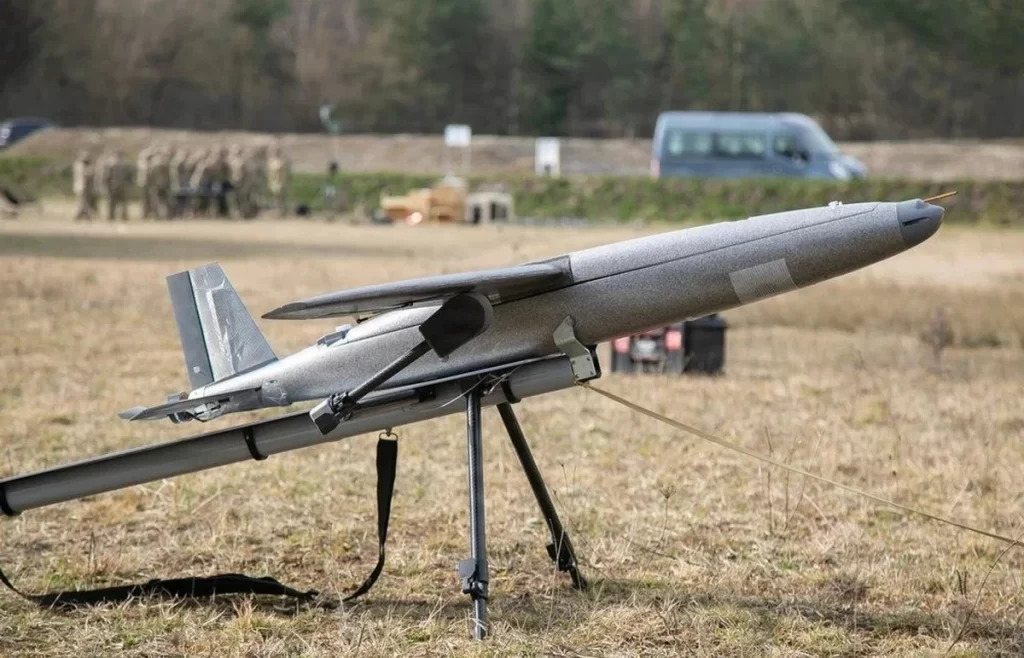
Perhaps the most surprising section of the encyclical addresses war (MH, paras. 188–209). The connection between war and AI may only be obvious at second glance: cyberwarfare increasingly transcends national borders, digital technologies are fundamentally transforming the nature of armed conflict, and autonomous weapons systems make life-and-death decisions without direct human control. For this reason, Leo XIV calls for an international ban on autonomous lethal weapons systems. No algorithm, he insists, should ever be permitted to decide over human life and death. At the same time, he advocates renewed multilateral cooperation and an international order capable of placing political limits on technological power. In today’s increasingly unstable geopolitical environment, this appeal could hardly be timelier.
The Real Question of Power
The disagreement between Peter Thiel and Pope Leo XIV ultimately reveals what is truly at stake. Thiel approaches AI from a geopolitical perspective. For him, technological superiority will determine the world’s future balance of power. Ethical regulation therefore appears as a strategic disadvantage. Pope Leo views the same technological revolution through an entirely different lens. In his view, the future will not primarily be decided by competition between the United States and China but by our understanding of what it means to be human. The decisive competition is not between nations but between two competing visions of progress: One regards human beings as systems to be optimized through technology. The other understands human beings as persons capable of responsibility, relationships, truth, and moral dignity.
That is why Magnifica Humanitas concludes not with technical recommendations but with a profoundly humanistic vision. No matter how sophisticated a computer system may become, it cannot create a heart that loves, develop a conscience, or assume moral responsibility. At the center of history remains the human face. Perhaps this explains the unusually fierce reaction to the encyclical from parts of Silicon Valley. Pope Leo is challenging not merely technological developments but also the power claims of a digital elite. His encyclical is therefore far more than a Church document. It is a contribution to one of the defining questions of the twenty-first century: What kind of civilization do we want to build? Will our future be shaped primarily by algorithms or by humanity?
Ultimately, everything depends on the image of the human person that guides our political, economic, and technological decisions. If the future of humanity is at stake, then, in the name of human dignity, it must ultimately be human beings—guided by genuinely humane values—who decide it.