

Harun Išerić is a senior teaching and research assistant at the University of Sarajevo—Faculty of Law. He is also a member of the Freedom of Religion Commission established by the Islamic Community in Bosnia and Herzegovina.
When Bosnia and Herzegovina (BiH) adopted its Law on Freedom of Religion in 2004, it established the principles of separation between the state and religious communities, state neutrality toward all religious communities, equal treatment of religious communities before the law, and cooperation through agreements between the state (including its subnational units) and religious communities. The latter agreements are intended to regulate “issues of common interest.” This framework has led scholars to describe the relationship between the state and religious communities as one of “separation with cooperation.”
As Fikret Karčić notes, state–religious community agreements are highly useful, as these fill gaps that legislation alone cannot address. They also provide greater clarity, precision, and practical application of legislative provisions, which are often abstract and open to differing interpretations. Another important advantage of such agreements lies in the way they can be amended only when both parties, the state and the religious group, agree. Unlike legislation, which generally can be changed through the ordinary legislative process, agreements typically require the consent of both parties—the state and the religious community. As a result, they offer greater legal certainty and stability regarding religious groups’ exercise of their rights.
The advantages of such agreements carry particular weight in the context of Bosnia and Herzegovina, given its complex constitutional structure and multilevel system of governance based on the division of two entities: Federation of Bosnia and Herzegovina and Republika Srpska. The scope of freedom of religion, the manner in which it is exercised, and the permissible limitations on that freedom are regulated differently across various levels of government. In such a fragmented legal framework, an agreement provides an additional layer of consistency, predictability, and legal certainty.
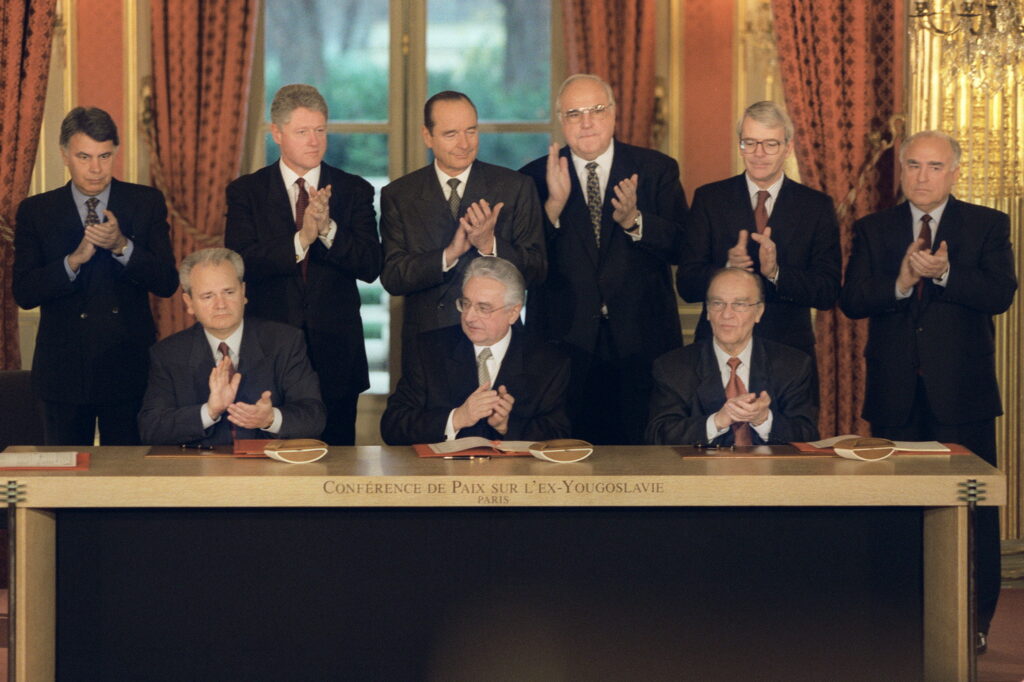
This post examines whether Bosnia and Herzegovina has discriminated against the Islamic Community by refusing to conclude an agreement with that community, in light of the state’s agreements with the Catholic and Serbian Orthodox Churches and of political representatives’ voiced opposition to an agreement with the Islamic Community.
History of BiH State-Church Agreements
Following the adoption of the Law on Freedom of Religion, Bosnia and Herzegovina concluded agreements with two of the country’s four historically established churches and religious communities. The agreement with the Catholic Church was signed in 2006, followed by an additional agreement regulating pastoral care for Catholics within the armed forces in 2010. An agreement with the Serbian Orthodox Church was signed in 2007. The Jewish Community never expressed an interest in concluding such an agreement. The Islamic Community initially took the same position, arguing that the Law on Freedom of Religion was sufficient to guarantee the protection and exercise of religious freedom for the country’s Muslim population. However, shortly after the two churches signed their agreements with the state, the Islamic Community reconsidered its position. In 2008, it initiated the procedure for concluding its own agreement with Bosnia and Herzegovina.
History and Content of the BiH–Islamic Community Draft Agreement
The draft agreement between Bosnia and Herzegovina and the Islamic Community was negotiated and agreed on by the Joint Working Body of the Council of Ministers of BiH and the Islamic Community of BiH. It was then approved by the Council of Ministers, which includes three ministers from each of the Bosniak, Serb, and Croat ethnic groups, respectively. And in September 2015, it was forwarded to the Presidency for further consideration and approval.
Both the structure and content of the agreement were expressly modeled, among other sources, on the two existing agreements concluded with the Catholic and Serbian Orthodox Churches. Like those agreements, it contains provisions explicitly guaranteeing various aspects of the manifestation of freedom of religion for Muslims. These include the right to time off (typically in the form of an unpaid break) to attend Jumu’ah prayer, to participate in iftar and suhoor during the month of Ramadan, and to perform the Hajj, as well as the right to perform the daily prayers (salah), to observe dietary requirements, to wear clothing and maintain an appearance consistent with religious beliefs, to perform the ritual slaughter of animals in accordance with Islamic rules, and to have Muslim male children circumcised.
At the same time, the draft agreement does not guarantee these rights unconditionally. It expressly provides that they may be limited where the requirements of legality, legitimacy, necessity, and proportionality are satisfied under Article 9 of the European Convention on Human Rights (ECHR/Convention). Looking at the comparative variable—the number of days of paid annual leave granted to members of each religious community—the draft agreement provides for five days of paid leave for Muslim religious holidays, compared to seven days for Orthodox Christians and six days for Catholics.
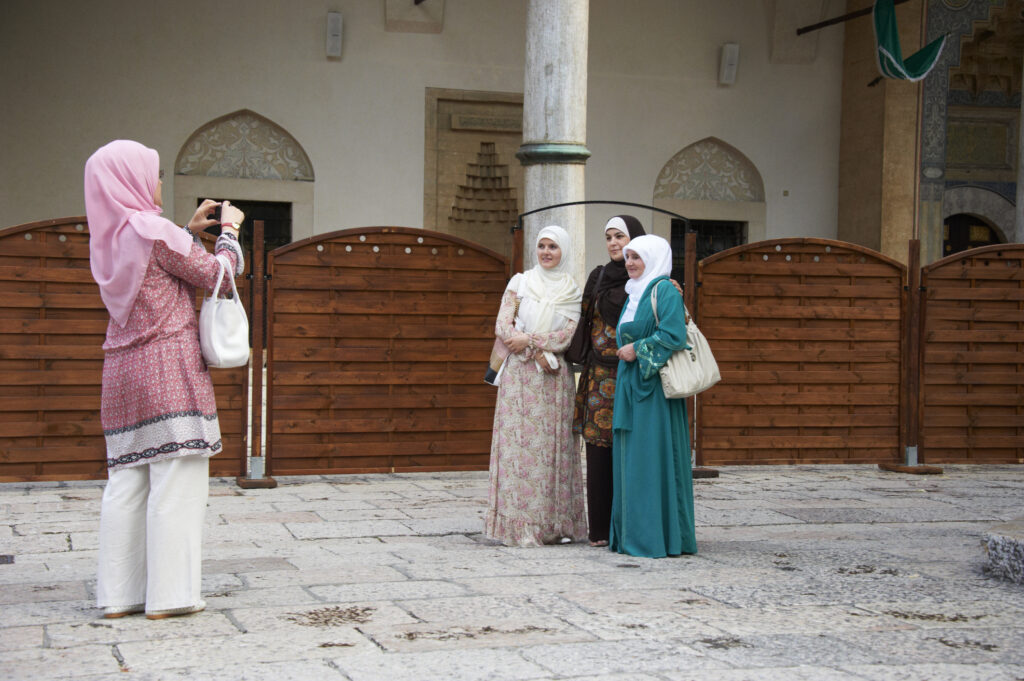
Although the Council of Ministers approved the draft agreement, the remaining steps required for the agreement to enter into force were never completed. These included ratification by the Presidency of Bosnia and Herzegovina and confirmation by the Parliamentary Assembly, the state’s bicameral legislature. The draft agreement has never been placed on the agenda of the Presidency of Bosnia and Herzegovina—the country’s collective head of state, composed of one Bosniak, one Serb, and one Croat member—due to opposition expressed publicly by the sitting Croat and Serb members of the Presidency.
The failure to sign the agreement has been consistently criticized by the Islamic Community as discriminatory toward the country’s largest religious community and its members. In its 2025 Annual Report, the Islamic Community’s Freedom of Religion Commission stated that the “delay and effective blocking of the process of negotiating the proposed agreement has a negative impact on freedom of religion and discriminates against the entire Islamic Community in BiH and Muslims in relation to the other two traditional religious communities [the Orthodox and Catholic Churches] and their members.”
The Strasbourg Court’s Perspective
To assess the Islamic Community’s claim, it is helpful to consider case law of the European Court of Human Rights (ECtHR) on the prohibition of religious discrimination under Article 9 in conjunction with Article 14 of the ECHR. This approach is particularly relevant because the ECHR enjoys a specific constitutional status in Bosnia and Herzegovina: it is directly applicable and takes precedence over all other domestic law.
The ECtHR assesses discrimination by asking two principal questions. First, has the state treated differently persons who are in analogous or relevantly similar situations (or has the state failed to treat differently persons whose situations are materially different)? Second, if such a difference (or lack of difference) in treatment exists, is it objectively justified?
Answering these questions requires determining, first, whether state action is in pursuit of a legitimate aim, and second, whether the means employed by the state are reasonably proportionate to that aim.
Most recently, in Christian Congregation of Jehovah’s Witnesses v. Italy (June 2026), the ECtHR examined whether a state’s refusal to conclude an agreement with a religious community was compatible with the Convention, finding that Italy discriminated against Jehovah’s Witnesses by unjustifiably preventing them from entering an agreement that would give them access to the state’s religious funding system, violating Articles 14 and 9. Earlier, in Ancient Baltic Religious Association Romuva v. Lithuania (2021), the Court considered whether the refusal to grant state-recognized status—and accompanying legal privileges—to a religious association violated the Convention. The ECtHR held that Lithuania violated Articles 9 and 14 by refusing to grant the Romuva religious association state recognition for reasons that were not objectively justified and were incompatible with the state’s duty of neutrality and impartiality.
Like the situation of the Islamic Community in Bosnia and Herzegovina, both cases raised the question of whether a state’s refusal to confer a particular legal status or enter into an agreement with a religious community was compatible with the prohibition of discrimination, read in conjunction with the right to freedom of religion.
Is the State’s Refusal to Sign the Agreement Discriminatory?
Turning to the first stage of the ECtHR’s discrimination analysis (difference in treatment), it is difficult to dispute that the Islamic Community has been treated differently from similarly situated religious organizations in Bosnia and Herzegovina. While the Catholic and Serbian Orthodox Churches have concluded agreements with the state and enjoy the legal benefits arising from them, the Islamic Community—similarly constituting a historically established religion—has been denied the same legal framework. Moreover, as discussed further below, public statements by politicians opposing the draft agreement indicate that this difference in treatment was based on religion.
Turning to the second stage of the Court’s discrimination analysis (justification of the different treatment), the Law on Freedom of Religion does not specify the grounds on which the state—through the Presidency or Parliamentary Assembly—may refuse to conclude an agreement after the Council of Ministers has issued a favorable opinion. Nor does it provide an effective legal remedy in cases of administrative silence or refusal, despite the fact that the Islamic Community has been waiting for a final decision for almost two decades. This legislative gap not only creates the potential for arbitrary decision-making but also prevents religious communities from determining with sufficient certainty the criteria that will be applied when deciding whether an agreement will be concluded.
Political Criticism of the Agreement
To assess whether the refusal to ratify the draft agreement was based on reasonable and objective grounds, it is worth examining the public statements made by members of the BiH Presidency.
Mladen Ivanić (Serb Presidency member 2014–18) insisted on other churches’ procedural involvement and their approval of the draft agreement to ensure no religious community enjoyed preferential treatment. Ivanić added that the draft agreement would have been ratified had its content been identical to the agreement concluded with the Serbian Orthodox Church. In his opposition to the draft agreement he also claimed it would undermine the secular character of the state by recognizing time away from work for prayers, special dietary requirements, and leave for obligatory pilgrimages. He further claimed that the agreement guaranteed the right to attend Jumu’ah prayer regardless of the nature of a person’s employment, provided that only imams could circumcise Muslim male children, and permitted the wearing of traditional religious clothing in public institutions.
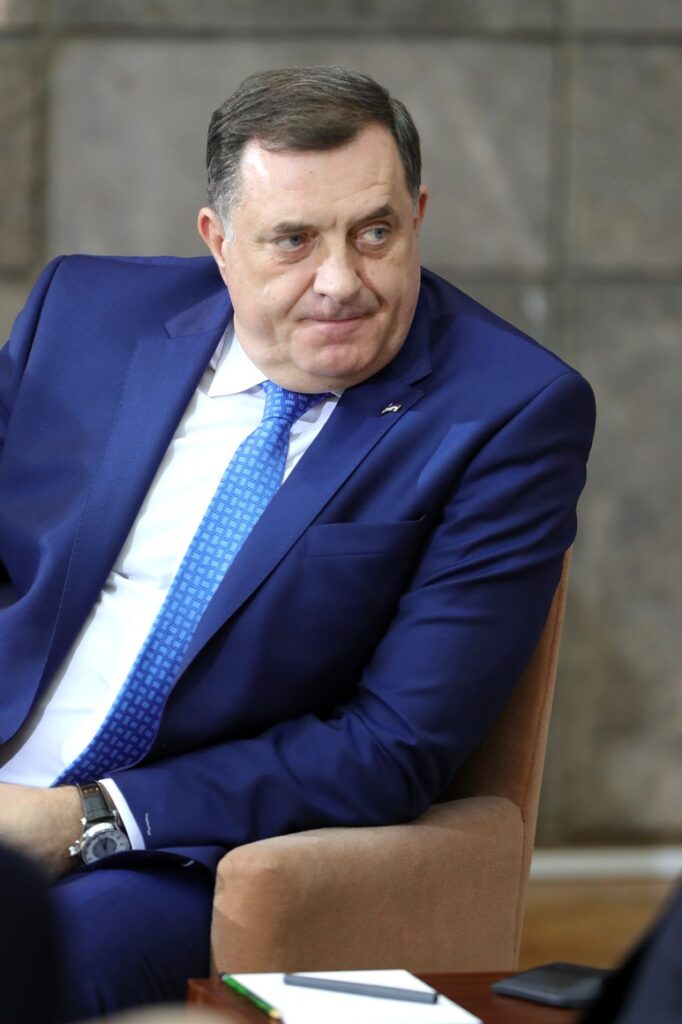
Similar objections were raised by Milorad Dodik (Serb Presidency member 2018–22). He argued that, under the draft agreement, Muslim employees would be entitled to leave work at midday on Fridays to attend Jumu’ah prayer while their employers would still be required to count that period as working time, provided the hours were made up later. According to Dodik, the draft agreement would be unworkable in industrial production, where pausing a production line for employee prayer would disrupt the manufacturing process. Dodik further argued that the draft agreement would discriminate against members of other religious communities because, in his view, it granted Muslims “many more rights” than were available to others. He claimed that several provisions of the agreement guaranteed “things that are inappropriate for a democratic country” and amounted to the introduction of religion into state institutions, favoring one religious community over all others. He ultimately argued that concluding the agreement would transform Bosnia and Herzegovina into a “Taliban state.”
A comparison between Ivanić’s and Dodik’s statements and the actual text of the draft agreement reveals a significant discrepancy. First, contrary to the claims made by its opponents, the draft agreement does not guarantee religious rights unconditionally. It expressly recognizes that the exercise of those rights may be restricted where such limitations satisfy the requirements of legality, legitimacy, necessity, and proportionality under Article 9 of the ECHR.
Second, unlike the agreements concluded with the Catholic and Serbian Orthodox Churches, the draft agreement with the Islamic Community has effectively been made contingent on the approval of other religious communities. Even if one or both churches opposed the agreement, such opposition could not, in itself, constitute an objective and reasonable justification for treating the Islamic Community differently.
Third, the political objections appear to be directed primarily at removing explicit protections for various manifestations of freedom of religion afforded to Muslims. Even if Islamic communities receive some specific rights, is not a sign of discrimination toward other communities, as equal treatment does not object to accommodation of a specific group’s unique needs. Rather than identifying concrete legal deficiencies in the draft agreement, many of the criticisms challenge the very recognition of religious practices already protected under domestic law and the ECHR. Finally, some of the public statements carry a clear Islamophobic undertone. Characterizing Bosnia and Herzegovina as a potential “Taliban state” if the draft agreement were concluded goes beyond legal or constitutional criticism and instead invokes inflammatory stereotypes of Islam and Muslims (which have long characterized Dodik’s speech).
More broadly, none of the arguments advanced against ratification identifies a concrete threat to national security, public safety, public order, public health, or the rights and freedoms of others—the legitimate grounds on which manifestations of religion may be restricted under Article 9 of the ECHR. Nor have opponents of the agreement pointed to any domestic case law or administrative practice demonstrating that accommodating Friday prayers, religious dress, dietary requirements, or the circumcision of Muslim male children has caused the disruption or harm they allege. Likewise, they have failed to show that any provision of the draft agreement is incompatible with the domestic legal order or existing legislation.
In the absence of such evidence, the justifications offered for refusing to conclude the agreement appear to rest on speculative assertions rather than objective and reasonable grounds capable of justifying differential treatment on the basis of religion.
Conclusion
Given the political context and legislative history, the government’s refusal to ratify the agreement between Bosnia and Herzegovina and the Islamic Community amounts to a violation of the prohibition of discrimination when read in conjunction with the right to freedom of religion. As a result, more than half of the country’s population—those who identify as Muslims—remain without the contractual guarantees and additional legal protections afforded to members of two of the country’s other traditional religious communities. The absence of such an agreement is particularly concerning in the context of a growing climate of Islamophobia, fueled in part by the rhetoric of domestic political actors and the increasing use of the European Union accession process to question or restrict manifestations of Muslim religious freedom. Against that backdrop, the continued refusal to conclude the agreement not only perpetuates unequal treatment but also sends a troubling message about the equal status of religious communities in Bosnia and Herzegovina under the rule of law.