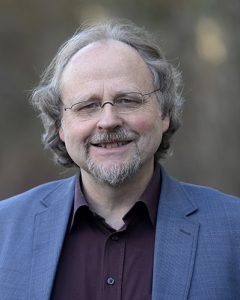
Piotr Szymaniec holds the degree of Habilitated Doctor of Law from the University of Wrocław. He is a professor at the Institute of Socio-Legal Studies at the Angelus Silesius University of Applied Sciences in Wałbrzych (Poland).
In the 19th-century, when there was no independent Poland on the map of Europe, Catholicism became an important factor in building a modern Polish nation. It is no wonder, then, that the first constitution of the re-established Poland, of March 17, 1921 (the “March Constitution”), contained several religious elements, even though it was modeled after the Constitutional Laws of the Third French Republic of 1875.
The March Constitution started with the proper invocation of God (invocatio Dei) in the preamble: “In the name of Almighty God! We, the Polish Nation, grateful to Providence for setting us free from a servitude of a century and a half . . . .” During the drafting phase, proposals that only a Pole who is Catholic could be president of the country were introduced and voted on twice[1]. Ultimately, such a provision did not appear, but the president, regardless of his religion, was still required to take the Catholic oath contained in Article 54:
I swear to Almighty God, One in the Holy Trinity, and I vow to Thee, Polish Nation, that while holding the office of President of the Republic I will keep and defend faithfully the laws of the Republic and above all the constitutional law; … that I will devote myself individually to the duties of office and service. So help me God and the Holy Martyrdom of His Son. Amen.
It is quite surprising that the authoritarian Polish Constitution of April 23, 1935 (the “April Constitution”) had very few references to religion. The religious form of the president’s oath was maintained, but there was no preamble or invocatio Dei. The name of God was mentioned, however, in a very special context: Article 2 pointed out that the President of the Republic stood at the head of the State and that “the responsibility before God and history for the destinies of the State rests on him.”
After the collapse of the communist regime in 1989, one of the most discussed and controversial issues in the media was whether to include invocatio Dei in the preamble of the new Polish constitution. The political climate at the time significantly impacted the final shape of the preamble.
(more…)