God in Grundgesetz

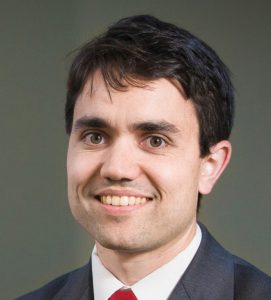
Justin Collings is Francis R. Kirkham Professor of Law at Brigham Young University J. Reuben Clark Law School and author of Democracy’s Guardians: A History of the German Federal Constitutional Court, 1951-2001 (Oxford University Press, 2015)

God is in the Grundgesetz—Germany’s Basic Law or postwar constitution—and right there at the beginning, the first proper noun in the entire document. “Conscious of their responsibility before God and man . . . ,” the preamble begins, and God comes first.

By putting God in the preamble, the Basic Law’s framers were not simply following tradition. The Weimar Constitution made no mention of God, nor did Bismarck’s Constitution for the German Empire, nor did the abortive “Paul’s Church” Constitution of 1848. And nor, most famously, did the U.S. Constitution of 1787, the oldest written constitution of them all. So what led the Basic Law’s framers to invoke—or at least to mention—God in the Constitution of 1949?
(more…)

Continue ReadingGod in Grundgesetz

Coronavirus, the Compelling State Interest in Health, and Religious Autonomy

W. Cole Durham, Jr. is Founding Director of the Law School’s International Center for Law and Religion Studies

Experience with COVID-19 has refocused attention on the relationship between the state’s interest in protecting public health and the protection of freedom of religion even during a clear health emergency.  Does the state have unfettered discretion to shut down religious services? Can the state regulate clergy conduct in ways that preclude the administration of last rites? Can the state specify whether and how religious rituals are performed? Can the state dictate funeral practices? Is the state free to determine how “essential” religious practices are?

These are simply a few of countless issues that have arisen over the past six months. The challenge presented by such examples is complicated by the fact that different religious communities have very different religious practices, generating distinctive religious needs, and posing distinctive health risks.  Also, for a variety of internal religious reasons, different religious communities may have differing abilities to adapt their religious practices to publically imposed mandates.

(more…)

Continue ReadingCoronavirus, the Compelling State Interest in Health, and Religious Autonomy

Constitutional Cultures Creating Constitutional Space

Brett G. Scharffs is Director of the International Center for Law and Religion Studies and Rex E. Lee Chair and Professor of Law for the BYU Law School.  Brock Mason is a Student Fellow for the International Center for Law and Religion Studies and PhD Candidate at Fordham University.

Gathered in Paris, France more than 70  years ago, the newly minted United Nations met to consider and vote on an important resolution. Drafted in the aftermath of World War II and its horrific humanitarian tragedies, Resolution 217A expressed deep aspirations to recognize, protect, and promote human rights throughout the world. And on December 10, 1948, with no country voting against it, Resolution 217A—the Universal Declaration of Human Rights (UDHR)—was adopted by the General Assembly. 

(more…)

Continue ReadingConstitutional Cultures Creating Constitutional Space