

Brett G. Scharffs is Director of the International Center of Law and Religion Studies and Rex E. Lee Chair and Professor of Law at the J. Reuben Clark Law School, Brigham Young University. This post is based on a presentation given at the conference “Promoting Pluralism Through Religious Cultural Heritage Preservation” held at Exeter College, University of Oxford, 18 March 2026.
Religious cultural heritage preservation can be viewed as a human rights issue. But taking a purely human rights approach to religious cultural heritage preservation can be somewhat awkward since human rights are primarily recognized and protected for individuals. Preservation can also be viewed as a property right, but scratch the surface, and you realize it goes much deeper, in part because the property at issue resonates so deeply within communities. And so a rights-based approach may not be the end-all be-all when justifying preservation of religious sites.
In considering religious cultural heritage preservation, I suggest we need to widen our gaze to include two additional perspectives: one that takes into account human dignity, which is the foundational principle of human rights, and a second that incorporates what I have been calling the “virtues of religious freedom,” which focuses on habits of character that will be inculcated and encouraged if we have cultures that value religious freedom.
Human Dignity and Religious Cultural Heritage
Western conceptions of human dignity are dominated by Immanuel Kant’s conception of human dignity, which is beautiful, deep, and rich but also abstract, philosophical, rationalistic, and individualistic, based on autonomy and self-direction.
In 2017, in anticipation of the 70th anniversary of the Universal Declaration of Human Rights (UDHR), the International Center for Law and Religion Studies instigated a project that led to the drafting and promulgation of the Punta del Este Declaration on Human Dignity for Everyone Everywhere. That 2018 Declaration was a reaffirmation of the significance of human dignity as the foundation and goal of the modern human rights revolution. As Ján Figel’, who at the time was Special Envoy for the promotion of freedom of religion or belief outside the European Union put it, “Dignity is an essential part of what it means to be human. Respect for human dignity for everyone everywhere helps us define and understand the meaning and scope of all human rights.” Article One of the Punta del Este Declaration began,
The inherent human dignity of all people and the importance of respecting, promoting, and protecting human dignity for everyone everywhere is the foundational principle and the key objective or goal of human rights, as well as an invaluable criterion for evaluating laws, policies, and government actions for how well they accord with human rights standards.
The Punta del Este Declaration for all its merits, however, followed the typical human rights patterns of focusing primarily on individuals and their dignity and rights.
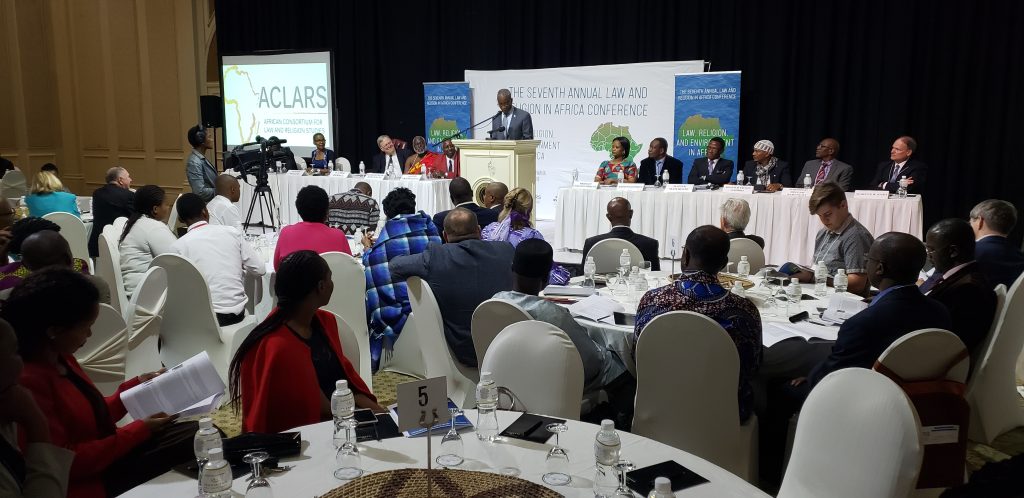
Later, in 2019, the Center participated in the 7th Annual Conference of the African Consortium of Law and Religion Studies (ACLARS) in Gabarone, Botswana, which produced the companion document African Perspectives on Human Dignity for Everyone Everywhere. In contrast to the Western-dominated conceptions of human dignity reflected in the Punta del Este declaration, the African perspectives document was much more grounded in the rich soil of day-to-day life. What the African Declaration teaches us about human dignity can illuminate our discussions of preserving religious cultural heritage.
The African Declaration’s Article 2 states,
Africans think of dignity not solely as an individual human characteristic or right, but as a concept that implicates our most important relationships, including family, community, tribe, and nation.
From the start, then, the African Declaration establishes that human dignity has implications beyond the individual.
Human Dignity is a concept that is understood as existing in relationships with others. As such, dignity implicates understandings of human duties and relationships, not just individual claims against others.
Notice that the African Declaration addresses one of the primary critiques of human rights, which is that human rights discussions and instruments neglect the duties that accompany rights. This critique is not altogether fair, given that UDHR Article 30 addresses duties and incorporates them into all UDHR articles. Nevertheless, there is a general sense that rights-based instruments are overall rights heavy and duties light.
Article 2 of the African Declaration continues,
There is a natural reciprocal understanding of human dignity. Part of our human dignity is recognizing and respecting the dignity of others. An African perspective on dignity is outward looking, not just inward reflecting.
For example in southern Africa, the Nguni Bantu concept of Ubuntu (in isiXhoso/botho in Setswana) and in Eastern Africa’s Kiswahili concept of Utu are closely related to human dignity, and involve the relational character of human lives existing in connection and community with others. In some African cultures such as in Botswana, the concept of totems is closely related to the idea of familial ties, which extend broadly, creating connections with others. African thinking about dignity necessarily includes the idea of equality; a concern for dignity is a concern for the equal dignity of all.
In the African Declaration, we see iterated and reiterated this idea of community, which is similarly integral to the religious cultural heritage context. Undoubtedly sacred sites have significance for the individual, but they hold communal significance and value well beyond the individual.
The last paragraph of the African Declaration’s Article 2 concludes,
The meaning of dignity is taught first in the home, by parents and grandparents, and should then be reinforced by primary and secondary education, and through societal institutions such as mosques and churches. In some African countries, the idea of dignity is closely associated with the idea of solidarity. This communal ideal of unity and sharing underscores a communal dimension of human dignity.
The first sentence of this paragraph echoes Eleanor Roosevelt’s words on the 10th anniversary of the Universal Declaration of Human Rights:
Where, after all, do universal human rights begin? In small places, close to home – so close and so small that they cannot be seen on any maps of the world. . . . Without concerted citizen action to uphold them close to home, we shall look in vain for progress in the larger world.
Note that this declaration on human dignity from an African perspective contains explicit reference to places of worship—to sacred sites. Interestingly, reference to sacred spaces never arose in discussions surrounding the drafting of the Punta del Este Declaration. In those multinational, multicultural, global discussions, no one mentioned churches or talked about physical spaces. But in Africa, discussions of human dignity naturally and inevitably turned to sacred space.
The final Article of the African Declaration on Human Dignity, Article 10, states,
[The 2019 ACLARS] conference has focused on the relationships between law, religion, and the environment in Africa. An important recurring theme has been the relational character of human rights and human dignity, and that it implicates and impresses upon all of our relationships, not just with other people, but with other animals and with our natural environments. Just as concepts like isiXhosa’s ubunt, Shona’s unhu and Kiswahili’s utu extend concern for human beings beyond rights and into relationships, they also extend our concern beyond human relationships and into other relationships, such as with God, with the wider world, and with the various environments we inhabit.
Western discussions of human dignity rarely extend beyond human beings. But at the Botswana conference, discussion turned to our relationships with the dead—our ancestors—as well as the unborn. It also turned to the natural environments in which we live—animal life, our physical environment, and the sacred world around us. It is striking that the final words of the African Declaration appeal to relationships beyond one’s relationship with oneself, including forthrightly with God. This richly relational way of thinking about human dignity is far different than how the primary Western conceptions of human dignity are understood.
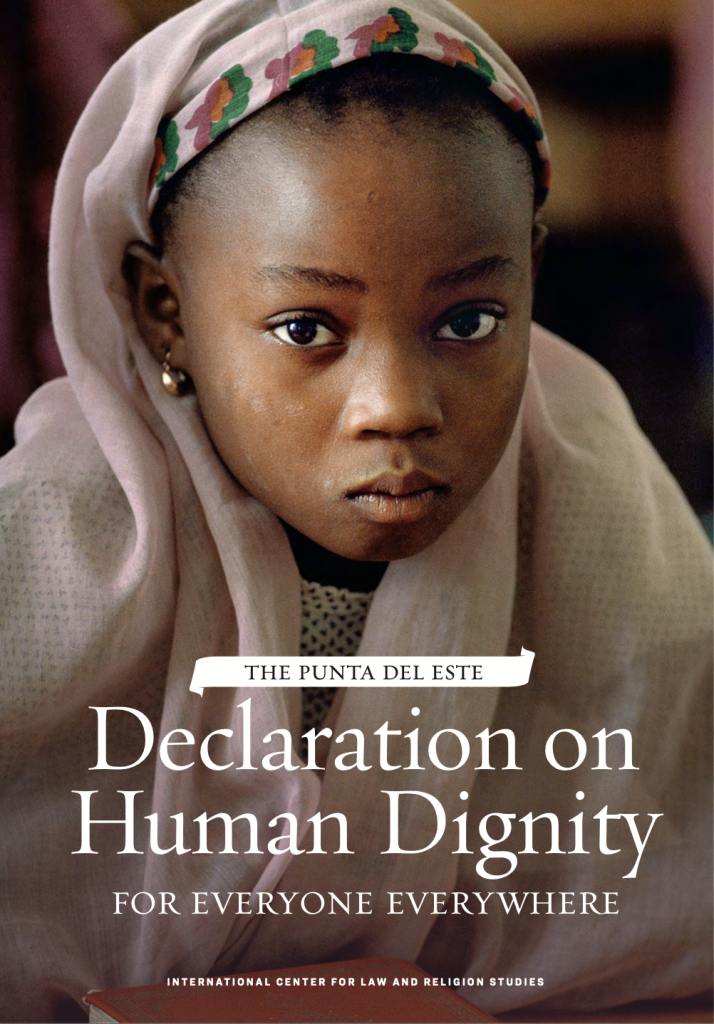
Over the last ten years, the International Center for Law and Religion Studies has helped develop a variety of human dignity related projects. In 2022 Ewelina Ochab and I published Dignity and International Human Rights Law: An Introduction to the Punta del Este Declaration on Human Dignity for Everyone Everywhere. In 2023, the Center facilitated the publication of African Conceptions of Human Dignity, a book that grew out of the 2019 ACLARS conference and African Declaration. In January 2026, the book New Perspectives on Human Dignity in Asia: Cross-Cultural Interpretations and Dialogue was published, as an outgrowth of a conference we held with Asian scholars and experts at BYU–Hawaii. In 2024, Andrea Pin, Dmytro Vovk and I edited the volume Human Dignity, Judicial Reasoning, and the Law: Comparative Perspectives on a Key Constitutional Concept. We are also working on an edited volume on Islamic Perspectives on Human Dignity that we hope will come to fruition before long.
In summer 2026, the ICLRS will sponsor a conference at Christ Church, University of Oxford, on indigenous perspectives on human dignity. The Center’s goal in facilitating discussions and scholarship is not to create an imperial definition of human dignity but to widen our gaze and open our eyes. In doing so, we learn and inform our understanding of human dignity and our human rights work—particularly when we listen to voices not typically listened to.
The Virtues of Treasuring Our Religious Cultural Heritages
Paradoxically, I am a lawyer discussing the limits of juriscentric approaches. I am also a Westerner in the truest sense of the word—an Oxford-educated American—discussing the limits of Western approaches. My main field is law and religion, and when advocates of freedom of religion speak, we almost always speak in terms of rights. Lately, however, I have been thinking about the need for supplemental forms of discourse that complement rights-based approaches. One such complement is what I call “the virtues of religious freedom.” Contemplating the virtues of religious freedom invokes questions such as,
What type of societies will we cultivate if we value religious freedom?
What virtues and character traits will we inculcate and encourage in ourselves, our children, and our grandchildren?
What habits of the head, of the heart, and of the hand must we develop in ourselves and others to preserve religious freedom?
Societies will value religious freedom more if there is less talk about religious freedom rights and more discussion of the virtues of religion and more concrete evidence that religion inculcates virtues to the benefit of all.
Thus, if we value religious freedom, we will strive to develop in ourselves and our children habits of the head such as curiosity, open mindedness, and tolerance. We will practice habits of the heart that make us and our children more generous, more thoughtful, and more inclined to help those less fortunate than ourselves. We will develop habits of the hand that include orienting ourselves and our families toward service—visiting and meeting the needs of those who are hungry, homeless, imprisoned, or otherwise vulnerable.
I posit that we should similarly consider the virtues of religious cultural heritage preservation: If we cared about religious cultural heritage, we would develop in ourselves and others respect, yes, but also reverence. We would develop respect for and love of connection, yes, but also of communion. A love of gathering, yes, but also of worship. A love of memory, yes, but also love and support in grief. A love of service, yes, but also of consecration. A love of prayer, yes, but also of revelation.
Conclusion
In considering the preservation of religious cultural heritage sites, we assuredly must focus on rights-based approaches. But in all our advocacy, particularly when advocating outside the halls and walls of Oxford, let us not forget that rights-based approaches require complements. Let us remember that human dignity is the wellspring, the foundation, and the lifeblood of human rights. Human dignity, and especially conceptions of human dignity that reach beyond familiar Western conceptions, will help us understand the value of the preservation of our religious cultural heritages. We should also think in terms of the types of people we will become if we genuinely treasure our places of religious heritage. Here, we must invoke and appeal to the language of the heart and hand, in addition to the language of the head.