

Luca Pietro Vanoni is a full professor of comparative public law at the University of Milan.
Benedetta Vimercati is an associate professor of constitutional law at the University of Milan.
This post is a part of our series on Magnifica Humanitas.
The entire concrete and historical experience of law leads back to this single living point, which is the person. This kind of magical ring joining the infinite and the empirical is, as such, activity and sovereignty: activity, because it is life itself moving and organizing itself in all its concrete needs; and sovereignty, because it is the affirmation of life as truth, that is, of its infinite destiny.
—Giuseppe Capograssi[1]
Introduction
For years, the debate on AI has largely followed a familiar script: defining the boundaries, establishing principles, and building the right algorithm. The main milestones of this process are well known: the 2019 OECD Principles on AI(updated in 2024), the 2021 UNESCO Recommendation on the Ethics of Artificial Intelligence, and the 2024 European Union AI Act. Although different in scope and legal force, these instruments share a common assumption: that the challenge posed by AI is primarily a challenge of governance and that governance essentially consists of setting rules. Pope Francis described this approach as “algor-ethics,” to indicate a set of shared ethical safeguards capable of guiding AI development across different cultures and value systems. Pope Francis’s use of this term captured something real—the urgent need to ensure that technology remains a tool in service of humanity, rather than allowing humanity to become subordinate to technology.
Pope Leo XIV’s encyclical Magnifica Humanitas (MH) takes a different approach; as Paolo Carozza has argued, “AI is only indirectly the subject of the document.” The encyclical is not merely a reflection on technology, nor is it a handbook on digital ethics. It is, rather, an anthropological manifesto, written at a time when artificial intelligence is redrawing the boundaries of reality as we know it. This does not mean the Pope disregards the regulatory aspects of AI. On the contrary, he addresses them in very clear terms. Leo XIV warns, for instance, that the concentration of AI power in the hands of a few actors—capable of shaping political discourse, economic opportunity, and even the conduct of war—amounts to structural injustice.
The most interesting point, however, is that he invites us to approach these regulatory questions while keeping at the center the anthropological question that must guide both the ethical and the legal response. The deeper issue concerns what it means to know, to act, to choose, and ultimately to be human: which anthropology should guide our response to technological power, and how human flourishing ought to be pursued. By bringing the discussion back to this original core, Pope Leo reopens the mystery of the human person in the age of technological power.
The Inescapable Human: From Trans- and Posthumanism . . .
One of the doctrinal cores of the encyclical’s anthropological approach emerges most clearly in the Pope’s words on transhumanism and posthumanism. Technology does not merely affect the external conditions of human life. It increasingly touches the deeper categories through which human beings understand themselves—their freedom, their vulnerability, their place in the world.
Of course, this challenge did not begin with AI. The question of what it means to be human is not new. It has long run through bioethical and biolaw debates, wherever science and technology have pressed against the boundaries of the body, identity, autonomy, and human agency itself. Already in neuroscientific debates, some traditional assumptions about human agency have been called into question. The discussion on free will, in particular, has opened the door to forms of determinism which, propelled by scientific premises, seek to redefine the human person in increasingly functional, measurable, and predictable terms. Thus, in an age strongly marked by the language of self-determination, a paradox emerges: while the individual claims an ever-broader power to define the self, certain scientific and technological discourses tend to describe human beings as determined systems governed by biological, neurological, or computational processes.
AI has intensified this tension because it concerns not only the manipulation of biological life but also the cognitive, symbolic, relational, and even spiritual dimensions of human existence. When accompanied by transhumanist and posthumanist narratives, it brings to the surface a reductive vision of the human person as an extremely complex yet ultimately hackable biological machine, entirely quantifiable and optimizable through technological intervention.
The encyclical presents transhumanism and posthumanism as the ideological background behind attempts “to foster enthusiasm for new technologies through a futuristic vision of an ‘enhanced human being’ or ‘human-machine hybrid’” (MH, para. 115). These visions are united by the dream of transcending the limits of the human condition; while transhumanism aims at enhancement through biomedicine and algorithms, radical posthumanism envisions a “hybridization of human beings, machines and the environment” (MH, para. 116).
These concepts condense into a connected “archipelago of conceptual islands,” formed within the surrounding “‘sea’ of assumptions” of postmodern philosophical and scientific thought (id.). This archipelago endorses the overcoming of the anthropocentric perception of the universe and promotes ideals such as faith in progress, the rejection of superstition and authoritarianism, and the ethical centrality of human self-determination.
Moreover, since its foundations, the transhumanist movement has been linked to the attempt to transcend traditional religion in favor of a new form of faith, promoting what J. S. Huxley called a Religion Without Revelation. Its aim is to overcome the modern conflict between science and religion through a rethinking of the sacred in a posthumanist sense—one that “secularizes traditional religious motifs . . . and endows technology with salvific meaning.”[2] In light of this, transhumanists draw on some ancient promises and dogmas of monotheistic religion—the transfiguration of the body, the immortality of consciousness—to frame future technoscientific achievements, such as the neural uploading of the mind. They are building a technological bridge between science and faith, precisely the movement the encyclical warns against: “It is one thing to integrate technology within a human-centered, relational vision; it is quite another to be guided by an outlook that devalues human limits and promises a purely technical form of ‘salvation’” (MH, para. 117).
. . . To Technology and Grace.
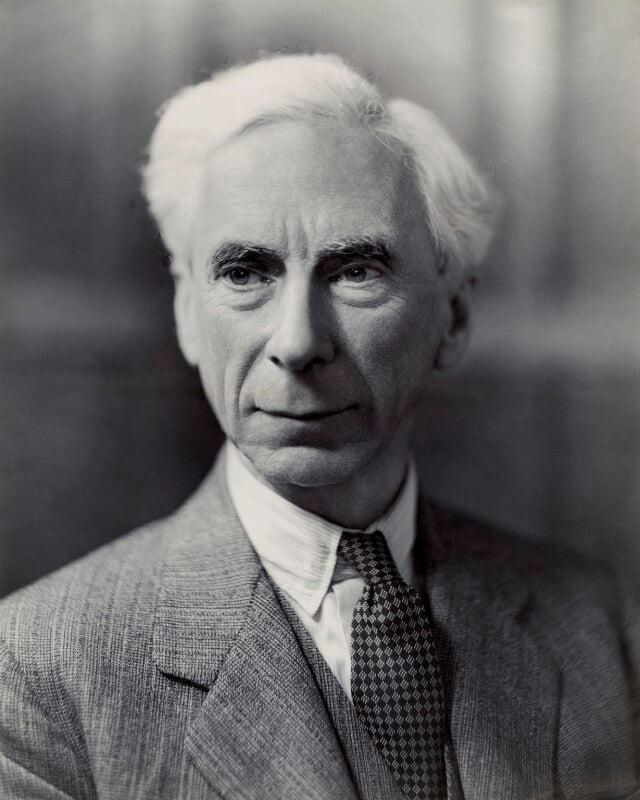
Behind these tendencies, one may discern some of the deepest human fears: the fear of mystery, of that irreducible dimension of the human person, which in the final analysis cannot be grasped, measured, predicted, or governed. On this point, Bertrand Russell’s lesson inevitably comes to mind: “[s]cience tells us what we can know, but what we can know is little, and if we forget how much we cannot know we become insensitive to many things of very great importance.”[3]
Alongside the fear of mystery is the fear of finitude. Much of the contemporary technological imagination appears to be animated by the desire to neutralize fragility, overcome vulnerability, and escape the limits of the body. If human flourishing is understood only as the expansion of capacities, the increase of efficiency, or the removal of constraints, then limitation can only appear as a defect to be corrected.
The encyclical insists in the opposite direction: “humanity flourishes not despite limitations, but often through them” (MH, para. 118). Vulnerability, suffering, and failure (MH, para. 122) are not malfunctions awaiting a patch. They are the places where we may “discover a new wisdom, tangibly experience the closeness of others and encounter the presence of the Lord” (MH, para. 119). This claim holds even at the breaking point. When “persons dehumanize themselves and bring about tragedy” the encyclical still insists that “a small light continues to shine within humanity, one that can be rekindled” (MH, 121). Therefore: “Humanity—in all its grandeur and woundedness—must never be replaced or surpassed” (MH, para. 126).
This focus on the mystery of humanity is what allows Leo XIV to reclaim precisely the very term transhumanism had colonized. The expression “more than human,” the encyclical insists, is not a technological promise but a theological one (MH, para. 127): the human person becomes “fully human . . . when we become more than human” through God’s transforming grace (MH, para. 128, quoting Evangelii Gaudium).
Where posthumanism imagines transcendence as an escape from the human, grace moves in the opposite direction. It does not lift us out of our humanity. It draws us more deeply into it. Grace does not make us less human, or something other than human. It makes us more fully what we already are. A richer anthropology recognizes what the opposing vision cannot: human beings flourish not by eliminating their limits but by living through them—in relationship, responsibility, dependence, care, and openness to what exceeds them. This is the conceptual inversion at the heart of the encyclical’s response to transhumanism. Transhumanism promises elevation through subtraction—less body, less limitation, less dependence. The encyclical answers with elevation through fulfillment—more relation, more vulnerability, more love. In the end, this is not merely a technical argument. It is a matter of the heart.
Do Not Be Afraid: Babel v. Jerusalem
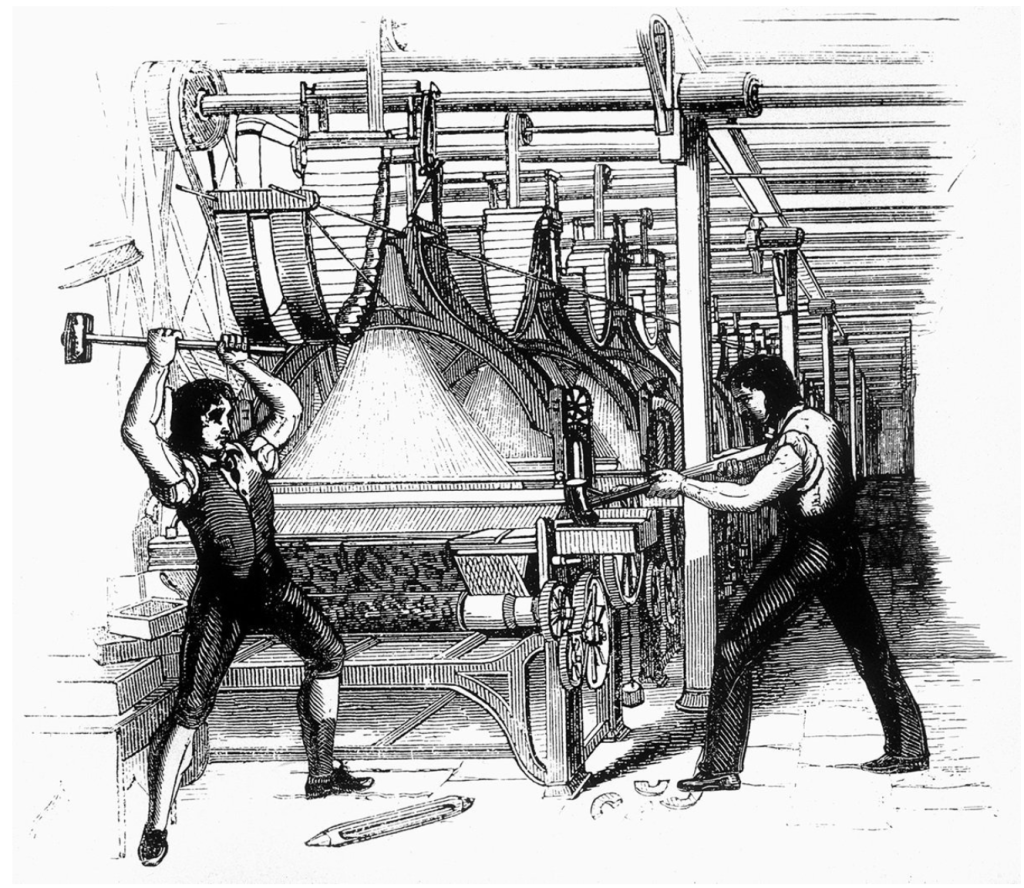
This call from wounded humanity to the fulfillment of grace cannot but recall St. Augustine’s Confessions: “Thou hast formed us for Thyself, and our hearts are restless till they find rest in Thee” (Confessions, bk. I, chap. 1). It is the same restlessness—now directed toward the world rather than away from it—that explains why Leo XIV rejects every form of technological Luddism or even “apocalyptic” posture. In perfect continuity with Leo XIII’s Rerum Novarum (RN) of 1891, the Pope welcomes the res novae of our time not as threats but as calls to discernment. Just as Leo XIII addressed the labor question with “realism and wisdom” (RN, para. 3), Leo XIV invites us to not be afraid of “getting our hands dirty on the construction site of our time” (MH, para. 16).
Here the issue of power emerges, closely tied to that of responsibility. The encyclical identifies a dangerous asymmetry. “Never has humanity held so much power over itself” (MH, para. 4, quoting Pope Francis), and yet never has responsibility for that power been so unclear, diffuse, and easily absorbed by a handful of unaccountable actors. Technology, the Pope argues, “has the power to heal, connect, educate and protect,” but it can also “divide, exclude and generate new forms of injustice.” In other words, technology is a talent but also a power that must be used rightly. As every constitutional lawyer knows, power is never neutral, because it takes the shape of whoever exercises it, controls it, and shapes it, or—as Leo puts it—it “takes on the characteristics of those who devise, finance, regulate and use it” (MH, para. 9). This is precisely where the asymmetry bites: power has grown immense and global, while responsibility for directing it rightly has shrunk into the hands of private transnational actors who remain largely detached from any meaningful accountability to the common good.
The appeal to responsibility follows from taking seriously the profound humanity to which Pope Leo refers. To embrace the human person in their entirety means valuing human freedom (which arises from reason) and responsibility—both of which are rooted in an essential feature of the human condition: the fact that the human person is always in relation.
The Pope captures this tension through two biblical images. On the one hand stands the Tower of Babel, symbol of the “idolatry of profit that sacrifices the weak” (MH, para. 10), whose builders sought to secure stability and power for themselves by imposing a single language, a single technology, a single direction (MH, para. 7). On the other hand stands Nehemiah’s rebuilding of Jerusalem, in which responsibilities were shared among families and priests, men and women, young and old, who coordinated their efforts and faced opposition together.
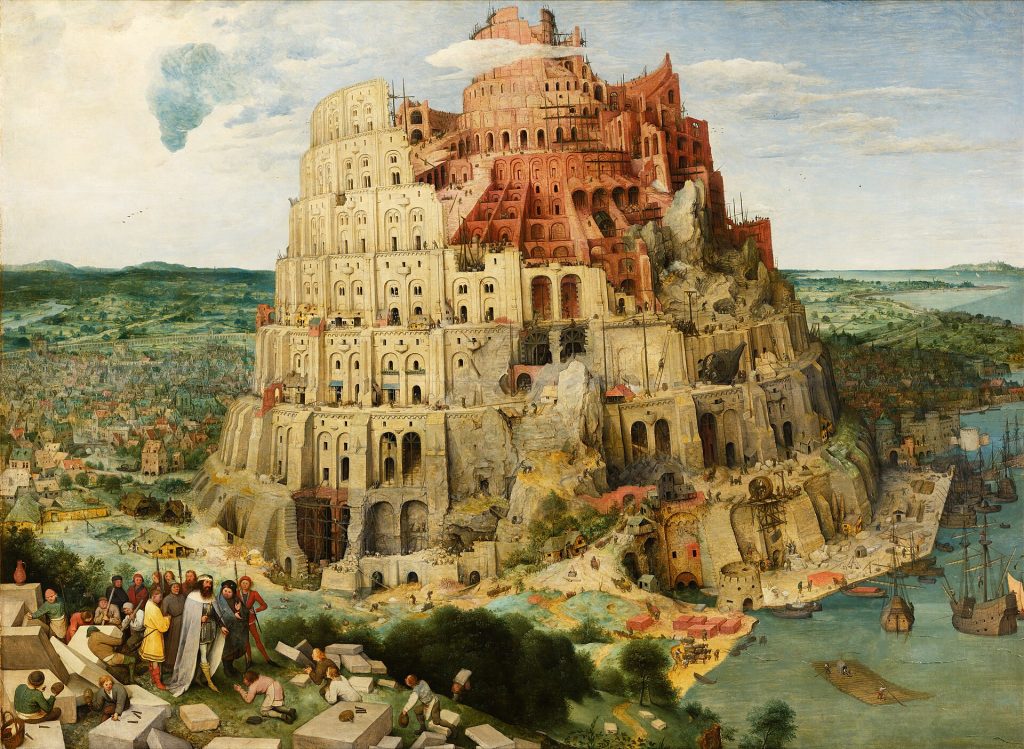
Under the influence of “Babel Syndrome,” mankind’s hubris aims to neutralize differences by claiming that “a single language—even a digital one—can translate everything, including the mystery of the person, into data and performance” (MH, para. 10). The logic of Jerusalem’s rebuilding is different; there, technology serves to raise the walls of fraternal coexistence rather than tear them down. Humanity must therefore choose between “a power that claims to dominate the heavens and a people who work together, in the presence of God, to rebuild the walls of fraternal coexistence” (MH, para. 9) along the path of a progress “measured by the dignity of each person” (MH, para. 12).
Conclusion
The great insight of Magnifica Humanitas lies in its reversal of the common perspective. Many have framed the human–AI relationship as a problem of governing the infosphere, asking how to regulate an external, pervasive technology. Leo XIV reverses this approach: it is not man who must judge AI; rather, AI, through its capacity for imitation, forces us to ask who we are. AI imitates but does not live: “so-called artificial intelligences do not undergo experiences . . . and do not know from within what love, work, friendship, or responsibility mean” (MH, para. 99). Technological development thus becomes the mirror that returns us to our essence—the capacity for choice and gratuitous love, the primacy of the heart. Leo XIV closes the circle by recalling that the quality of a civilization is measured by its capacity to recognize the other as “a face, not merely a function” (MH, para. 114). Magnificent humanity is not to be surpassed but safeguarded; its splendor is something “no machine can ever replace” (MH, para. 15).
The same reversal also extends to the law, and the responsibility for grasping its implications falls first and foremost on those who practice law. As Lawrence Solum suggested in a 1992 article on the personhood of AI, “thinking about the question whether AIs should ever be made legal persons does shed some light on the difficult questions the law faces about the status of personhood.”[4] Unlike AI, the human person is not just defined but also encountered; law does not live through formal architectures alone but through its relationship with the concrete person, in whom the infinite and the empirical meet—the encounter the encyclical asks us to honor. Hence the need to return to experience, understood not merely as a subjective datum but as the place where reality resists our constructions and corrects us. As C. S. Lewisadmirably wrote,
What I like about experience is that it is such an honest thing. You may take any number of wrong turnings; but keep your eyes open and you will not be allowed to go very far before the warning signs appear. You may have deceived yourself, but experience is not trying to deceive you. The universe rings true wherever you fairly test it.[5]
References:
[1] Giuseppe CAPOGRASSI, Il diritto secondo Rosmini, in F. Mercadante (ed.), LA VITA ETICA, Bompiani, Milano, 2008, p. 761, translation by the authors.
[2] Hava Tirosh-Samuelson, Transhumanism as a Secularist Faith, 47(4) ZYGON 710, 719 (2012).
[3] BERTRAND RUSSELL, THE HISTORY OF WESTERN PHILOSOPHY, at xiv (Touchstone/Simon & Schuster 2008).
[4] Lawrence B. Solum, Legal Personhood for Artificial Intelligence, 70 NORTH CAROLINA LAW REVIEW 1231, 1284 (1992).
[5] C. S. LEWIS, SURPRISED BY JOY: THE SHAPE OF MY EARLY LIFE 171 (Harcourt Brace & Co. 1956).