
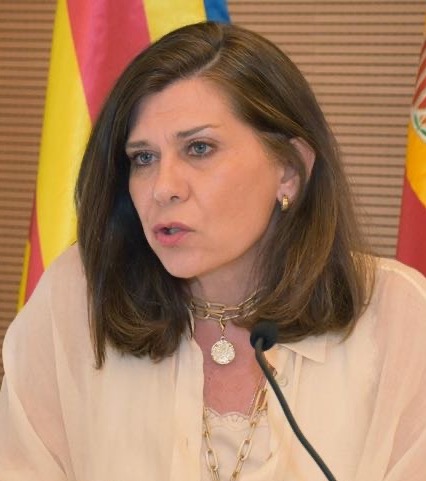
Francisca Pérez-Madrid is Professor of Law and Religion at the University of Barcelona.[1]
Pope Francis once described clericalism as “one of the greatest deformations” in the life of the Catholic Church. It is a strong diagnosis. What is striking, then, is how resistant that clericalism has proven to reform—even after Praedicate Evangelium, the most ambitious overhaul of the Roman Curia in decades.
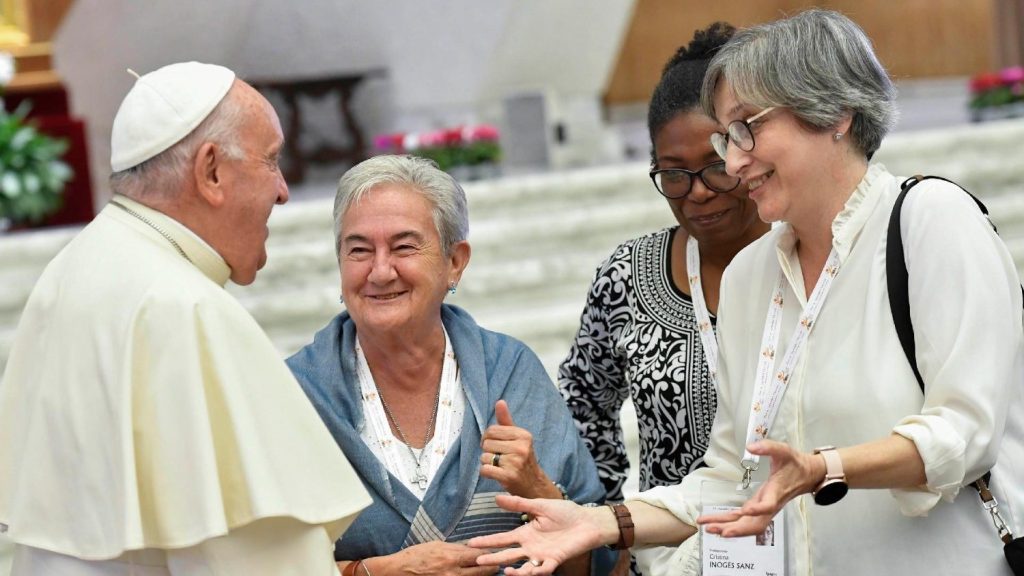
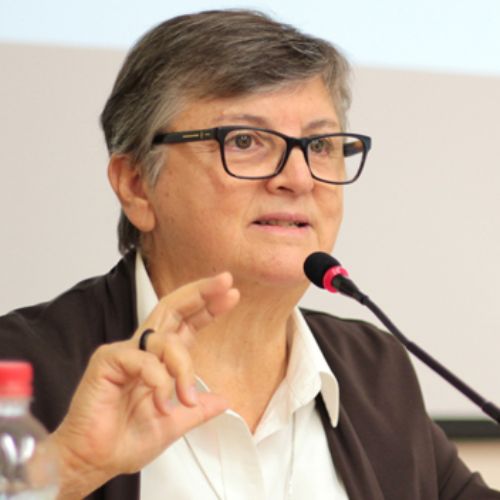
That apostolic constitution, promulgated in March 2022 after nine years of preparation, contains a genuinely historic statement: for the first time in the history of the Catholic Church, any member of the faithful—including a laywoman—can in principle lead a dicastery of the Roman Curia. And Pope Francis did not merely open that door on paper. In January 2025, Sister Simona Brambilla became the first woman ever named prefect of a Vatican dicastery, and Sister Raffaella Petrini was appointed governor of Vatican City State. Under Pope Leo XIV, the momentum has continued: Sister Tiziana Merletti was named secretary of the same dicastery in May 2025, resulting in three of its top five positions held by women religious.
These are real appointments, not symbolic gestures. Something has shifted.
What Has Not Shifted
And yet the overall picture remains one of exception rather than norm. The working sessions that actually drive day-to-day governance tend to be dominated by a prefect who is almost always a cardinal. The Synod on Synodality’s own study group acknowledged this explicitly in its 2026 report: women in positions of responsibility “sometimes struggle to be involved and listened to on equal footing with male colleagues, particularly in interactions with ordained ministers” (app. III, ¶ 14). The formal authority exists. The cultural reality lags behind.
There is also a revealing detail in the text of Praedicate Evangelium itself. The word service appears 71 times. The word rights—in relation to the faithful—appears six times. The right to good governance is not mentioned at all. This reflects a long-standing tendency in curial culture to frame participation in terms of service rendered to the institution, rather than in terms of the legitimate claims that the faithful—including women—have on it.
A Question Worth Asking
A further observation deserves attention. The most prominent appointments of recent years—the first prefect of a dicastery, the governor of Vatican City State, the secretaries of the main curial departments—have all gone to women religious, not to secular laywomen. This is unlikely to be accidental. Women religious bring something curial culture has always valued: a life ordered entirely toward the Church, institutional loyalty shaped by years of formation, and—not incidentally—a cost structure that does not require a competitive salary. A laywoman qualified to lead a major Vatican office would need to be paid accordingly and would arrive with a life, a family, and a professional identity of her own. That kind of independence has not traditionally been seen as an asset in the Roman Curia. Laywomen do appear in undersecretarial roles—but not, so far, at the top of the Roman Curia.
Praedicate Evangelium itself acknowledges, if only implicitly, that the concept of “layperson” it uses is a negative one, denoting simply one who has not received holy orders. A woman religious falls within that definition on paper. In practice, she occupies a middle ground that curial culture finds more familiar than a genuinely secular laywoman. If the most senior women the Church has brought into governance so far are those who have consecrated their lives entirely to the institution, the question of what Praedicate Evangelium actually changed for the majority of Catholic women remains very much open.
The Question Behind the Question
This leads to a deeper issue—and here I want to be clear about what I am not arguing. The answer to this gap is not to clericalize lay women: to measure their worth by how many ecclesiastical offices they occupy or to draw them into curial structures as a form of institutional co-optation. That would simply reproduce within women the same clerical logic that Francis identified as a deformation.
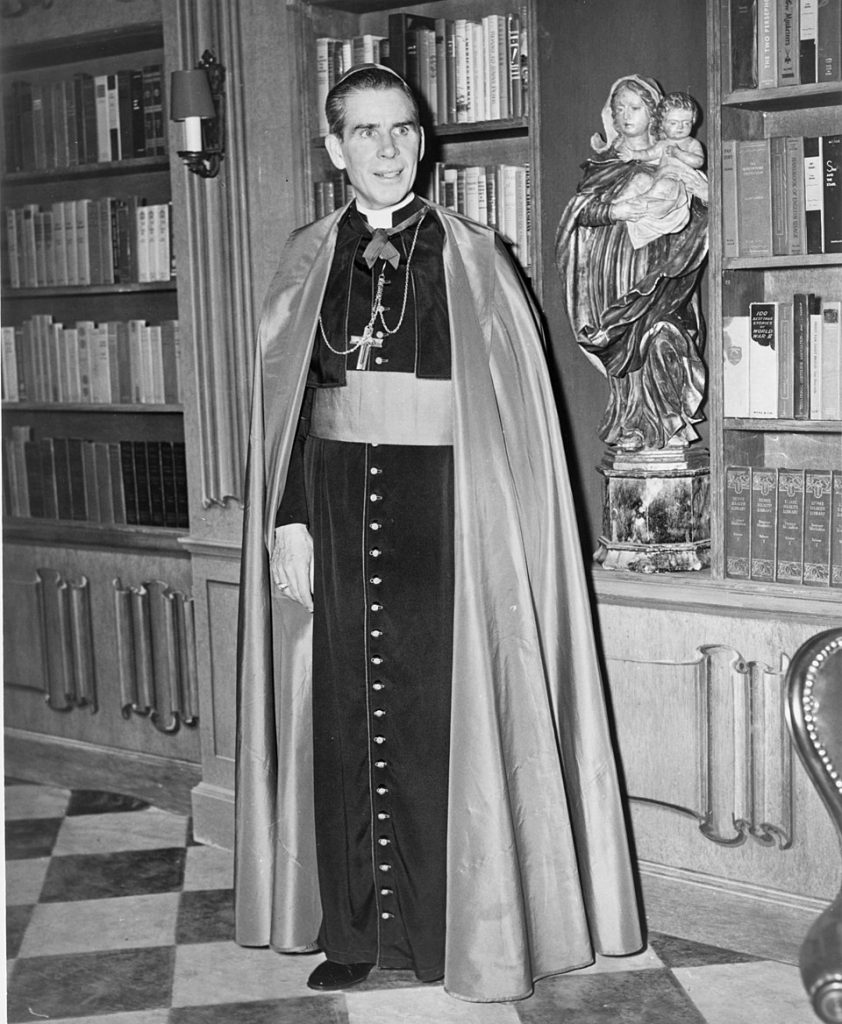
The soon-to-be Blessed Fulton Sheen, whose beatification is set for September 2026, put it bluntly: “Who’s going to save our Church? It’s not our bishops, it’s not our priests and it is not the religious. It is up to you, the people. You have the minds, the eyes and the ears to save the Church.”[2] Archbishop Sheen was not minimizing ordained ministry. He was insisting that the lay faithful have a mission that is irreducibly their own: to sanctify the world from within, through family, work, culture, and civic life. The laity are not deficient clerics waiting for access to clerical institutions. They are the People of God with a vocation for which no reform of governance structures can substitute.
This matters because the real measure of women’s place in the Catholic Church is not only—or even primarily—how many women sit on Roman dicasteries. It is how much the Church values what women actually do: in parishes, in families, in educational and charitable institutions, in theological reflection, in the everyday witness of their lives. The risk, in reducing the question of women in the Church to a question of governance structures, is that we reproduce the very logic we should be trying to overcome.
Why Governance Matters
None of this means that governance reform is unimportant. Unjustified exclusions are not minor irritants—they are injustices. If there is no theological or canonical reason why a laywoman cannot lead the Dicastery for Integral Human Development, which addresses migration, sustainability, and human rights, then the fact that it has not happened reflects a failure of institutional culture, not of doctrine. The historical exclusion was never required by divine law. It was a historical habit—now corrected in principle and waiting to be corrected in practice.
Governance structures also shape what is visible. An institution that rarely has women in positions where important decisions are made sends a message about what it actually believes regarding the dignity and capacity of women. The Synod study group described the recent appointments as “a prophetic sign of both symbolic and practical significance”—while noting in the same breath that the work is far from done (app. III, ¶ 14).
A Starting Point, Not an Endpoint
Praedicate Evangelium opened a legal door. The appointments of 2025 showed that the door can be walked through. What remains to be seen is whether these steps mark the beginning of a genuine cultural change—or whether they remain remarkable precisely because they are still so rare.
The deeper reform the document calls for is not organizational but cultural: “a profound change in the culture of governance and in the mentality of those who work in the Holy See.”[3] That kind of change is measured not only in appointments but in whether women who hold those appointments are actually heard—and in whether the Church’s understanding of women’s contribution extends well beyond the question of who sits at which table.
Both things can be true at once: the governance debate matters, and it does not exhaust the question. Holding both together is harder than choosing one side—but it is closer to the truth.
References:
[1] This essay draws on the author’s recent analysis of Praedicate Evangelium: Francisca Pérez-Madrid, The Roman Curia in Praedicate Evangelium: Toward Synodality and Co-responsibility, JOURNAL OF LAW AND RELIGION, 26 March 2026, at 1.
[2] Widely attributed to the archbishop, this quotation has not been traced to a specific primary source but is often cited to his address to the Supreme Convention of the Knights of Columbus at the Shrine of Our Lady of Czestochowa, Doylestown, Pennsylvania (May or June 1972).
[3] Pérez-Madrid, supra note 1, at 23.